Lab Diamond Insights
Lab Diamond Insights
Lab Diamond Insights is a research and consulting enthusiast website that provides insights on the luxurious diamond industry.
- 22+In-depth guides
- 100%Editorially reviewed
Lab-grown diamond buying guides, pricing data, and certification insights
Lab Diamond Insights is a research-driven resource for understanding lab-grown diamonds and investigating how they’re priced, how they’re graded, and how to evaluate quality before you buy.
Most information online is written by retailers or affiliates. We take a different approach: every guide is built using measurable data and independently verifiable sources, including diamond certification reports (IGI, GIA), retailer pricing benchmarks, and gemological research. Where possible, we link directly to original documents so you can validate the information yourself.
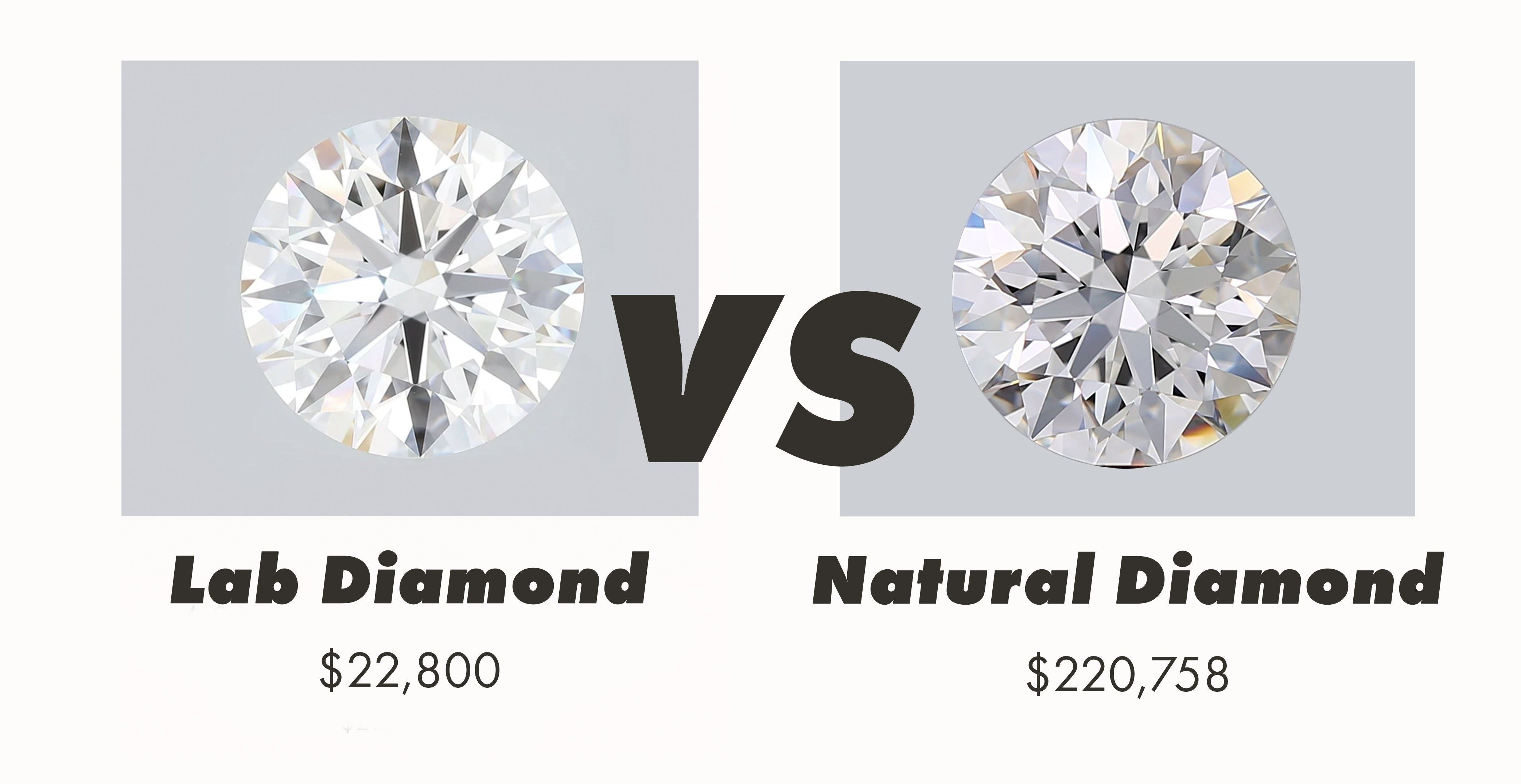
Start with the lab-grown vs natural diamond comparison to understand price differences, durability, and long-term value. If you're focused on budget, our lab diamond price guides break down cost trends by carat, cut, color, and clarity. Looking for maximum brilliance? The cut quality guide explains what actually impacts sparkle beyond standard grading metrics. For buyers concerned about authenticity, our certification guides explain how IGI and GIA grading works and how to read a diamond report correctly.
We also cover resale value, market trends, and common buying mistakes, so you can avoid overpaying or choosing the wrong specifications. All content is updated regularly to reflect current lab diamond prices, grading standards, and global supply trends which help you make informed decisions with up-to-date data.
 Featured · Sales
The Diamond Split in 2026: What Lab-Grown Crossing 50% of Global Sales Means for Indian Buyers on Price, Supply and Long-Term Value
Lab-grown diamonds now exceed 50% of global sales and have overtaken naturals in India's export volumes, but cost over 90% less per carat — creating a two-tier market with very different implications for Indian buyers.
Latest news
All news → News
NewsLab-Grown vs Mined Diamonds in 2026: What the 50% Market-Share Shift, Mine Closures and Price Collapse Mean for Indian Buyers
 News
NewsLab-Grown Diamonds at the Tipping Point in 2026: What the Engagement Ring Market Data Means for Indian Buyers
 Policy
How to Insure Your Lab-Grown Diamond Ring in India 2026: Appraisals, Coverage Gaps and What to Check Before You Buy a Policy
 News
NewsKay Jewelers' 2026 Rebrand: What a Major Chain's 'Leaner Assortment' and Store Overhaul Signals for Lab-Grown Diamond Buyers
Editorial guides
22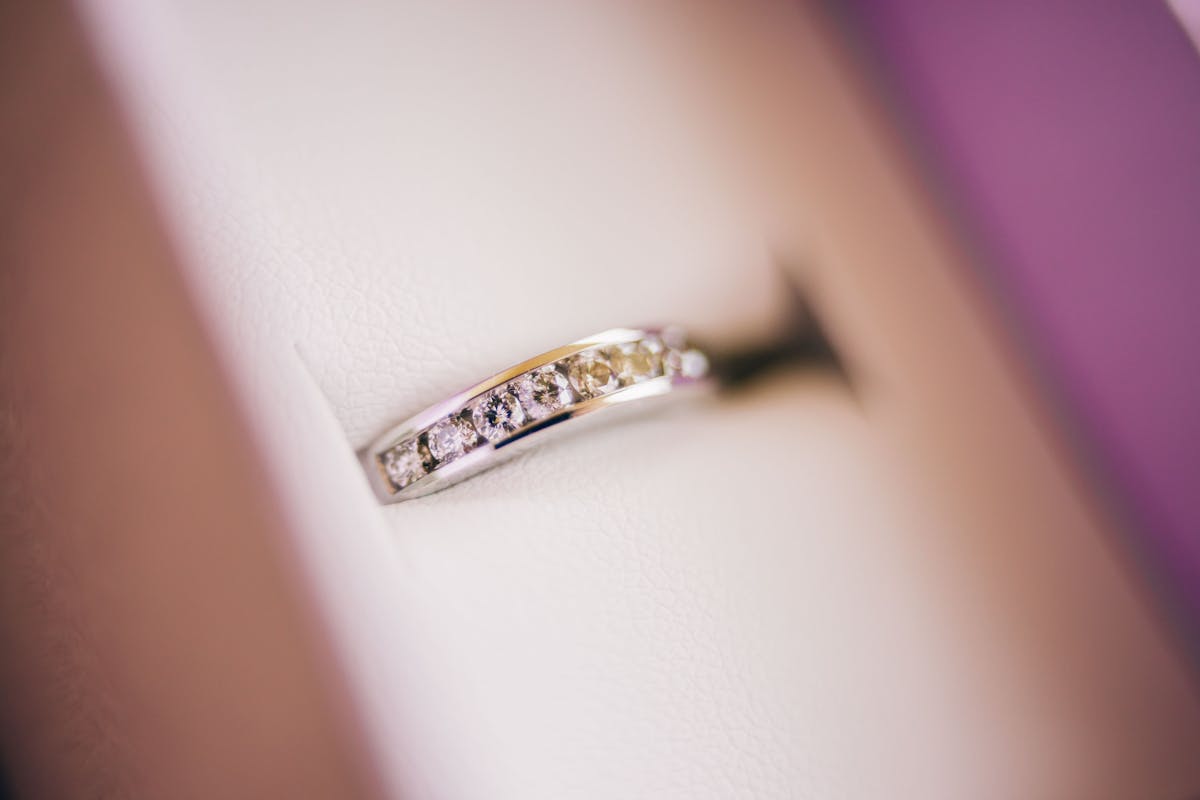 Featured guide
Women's Diamond Solitaire Ring Buying Guide: How to Choose the Right Stone, Setting & Certification
A women's diamond solitaire ring is defined as a single-stone ring in which one diamond, natural or lab-grown, is the sole focal point, set in a prong, bezel, or tension mount on a plain or tapered band. In India, prices range from roughly ₹33,908 for a natural 14K round brilliant solitaire to ₹1,68,380 or more for a 0.78 ct natural diamond, while lab-grown options such as True Diamond's Signature T 0.5 ct Solitaire Ring start around ₹47,993. The right choice depends on cut grade, certification body (GIA or IGI), metal karat, and intended wear frequency.
Updated 21 Aug 2026
Best Lab-Grown Diamond Stores in Delhi: A Buyer's Guide to Top Showrooms
Delhi buyers have at least five strong lab-grown diamond options in 2026: True Diamond, Solitaire Mart (Saket), Devi Diamonds, Diamos, and Better Diamonds. Together they span dedicated Delhi showrooms, a Delhi-NCR designer showroom, and online retailers, all carrying certified lab-grown diamond jewellery at prices typically 50 to 80 percent below equivalent mined stones. Before buying, verify IGI or GIA certification, confirm the growth method (CVD or HPHT), and compare per-carat pricing across at least two stores.
Updated 14 Aug 2026
Best Men's Diamond Solitaire Rings in India: A Buyer's Guide to Styles, Settings & Value
Men's diamond solitaire rings in India span a wide range — from entry-level 0.30 ct options under ₹50,000 to bold 2 Ct statement pieces priced between ₹2.00–2.66 lakh. Key variables are carat weight, setting style (classic prong, fluted band, Portuguese solitaire), and metal choice (14 KT vs 18 KT; yellow, white, or rose gold). Lab-grown diamonds offer the same optical properties as mined stones at significantly lower cost per carat.
Updated 8 Aug 2026
 Guide
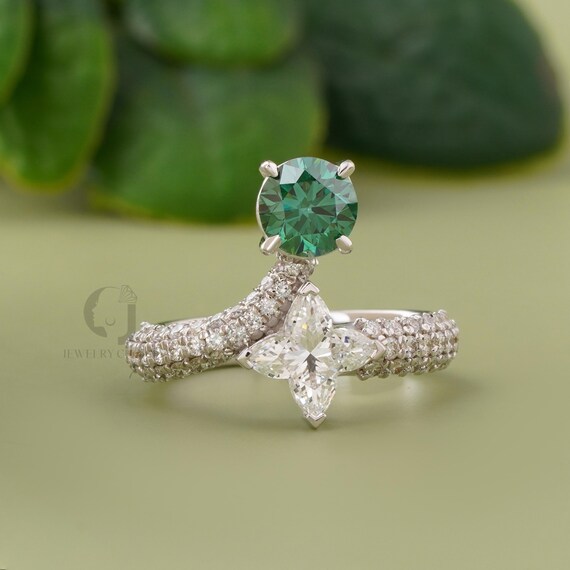
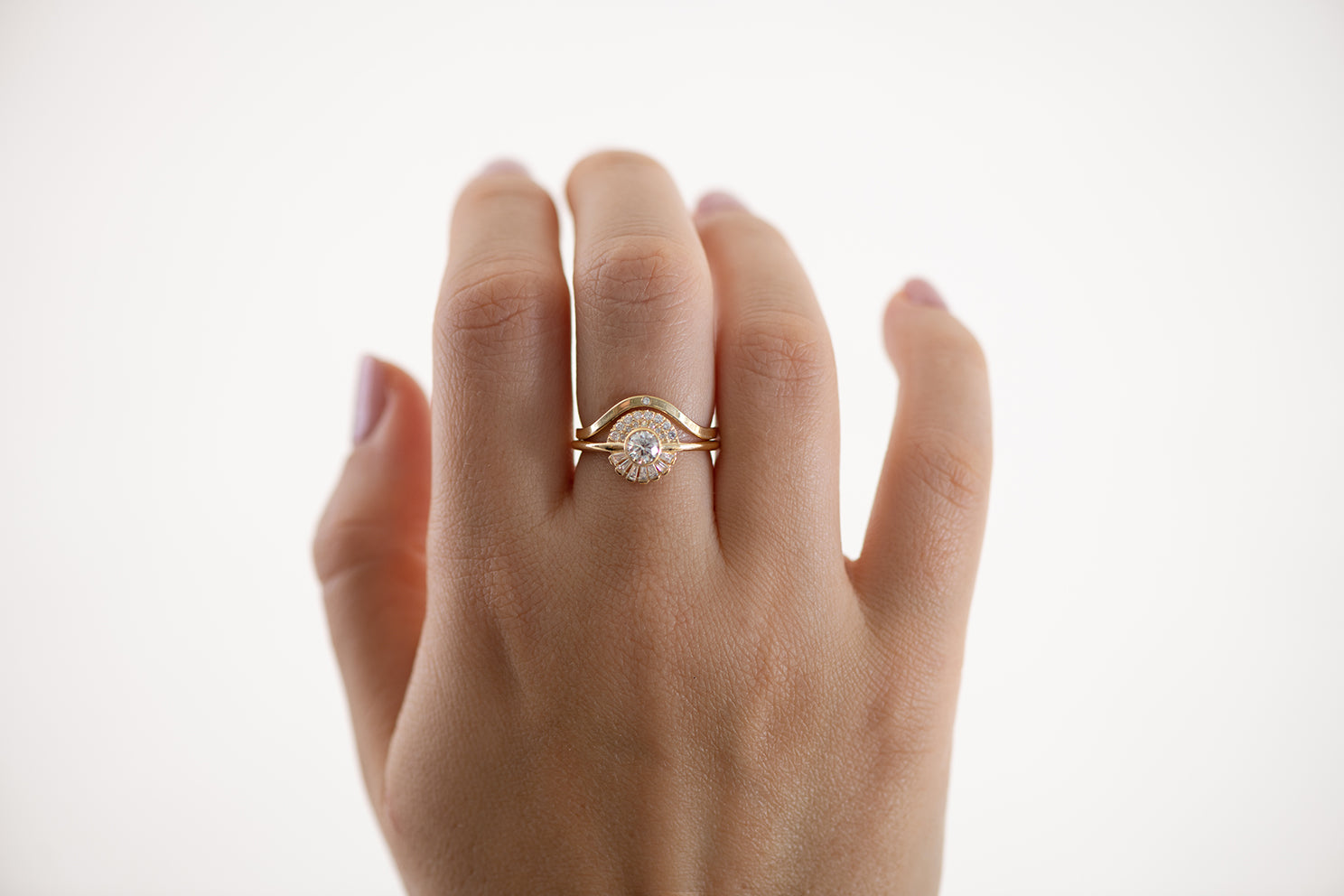
GuideLily Cut Diamond Rings: What to Know Before You Buy
The lily cut is defined as a patented fancy diamond cut featuring four lobed petals and 65 facets arranged in a flower profile, producing both floral silhouette and high brilliance. Key options range from the True Diamond Bloomingdale Lily Cut Solitaire Ring (classic white gold solitaire) to the 2 ct Petals Ring (bold statement), Lucira's bezel-set everyday style, and Stardust Diamonds' 1.15 ct Petal Bloom for a softer aesthetic.
Updated 9 Jul 2026
 Guide
GuideCurved Solitaire Engagement Rings: How to Choose the Right Band Style, Metal, and Fit
Curved solitaire engagement rings are defined as rings where the band arcs or contours around the center stone rather than sitting in a straight line, creating a smooth, gap-free look when worn alone or stacked. Key buying decisions involve whether you want an integrated curved band (band and stone sold as one piece, starting from around ₹84,547 for options like True Diamond's Curved V Cushion) or a separate contoured band added to an existing solitaire. Metal choice (14KT vs. 18KT; yellow, rose, or white gold), diamond shape compatibility, and sizing range all vary significantly by retailer.
Updated 27 Jun 2026
 Guide
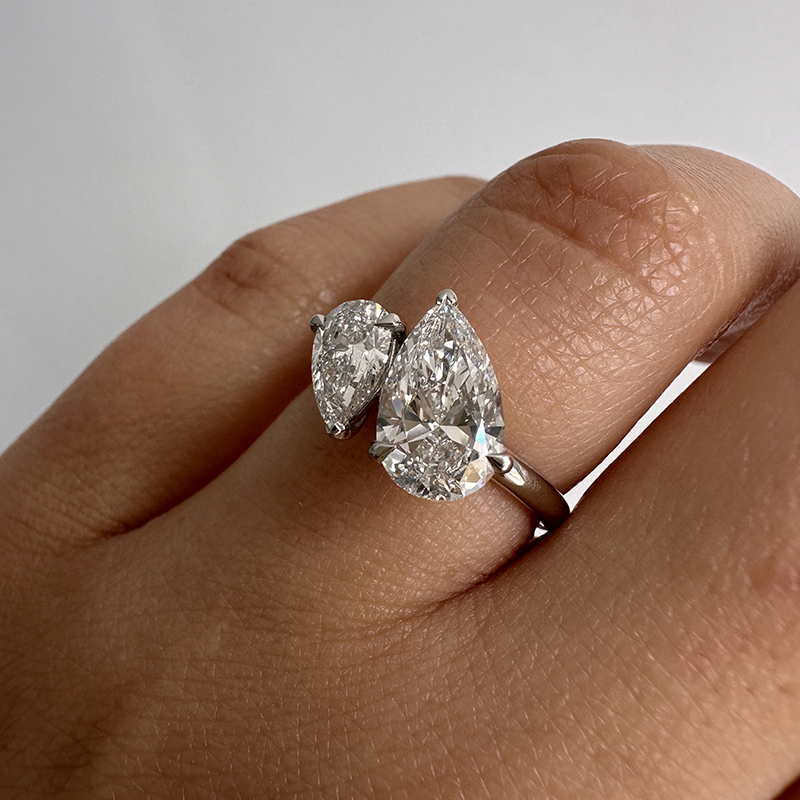
GuideToi et Moi Pear Diamond Rings: How to Choose the Right Two-Stone Style for You
A toi et moi pear diamond ring pairs two pear-shaped stones — often in contrasting colours — on a single band, symbolising two people united. In India, prices range from roughly ₹83,000 for a budget lab-grown option (Ashth) to ₹1.25 lakh+ for a personalised dual-colour pairing like True Diamond's Harsh and Rushali ring, up to bespoke luxury pricing at Graff. Key decisions are stone colour combination, carat weight, metal type, and whether you want a named or custom design.
Updated 27 Jun 2026
 Guide
GuideShould You Choose Lab-Grown Ruby Over Diamond for Engagement Rings? Consumer Sentiment from Bangkok Jewelers
Lab-grown rubies and lab-grown diamonds are both viable engagement ring center stones, but they differ sharply on hardness (ruby scores 9 vs. diamond's 10 on the Mohs scale), price, and cultural symbolism. In 2024, 52% of U.S. couples chose lab-grown diamond engagement rings according to The Knot's 2025 Real Weddings Study, while colored gemstone alternatives like ruby are gaining traction among buyers seeking individuality — a trend visible in Bangkok's custom jewelry market.
Updated 11 Jun 2026
Best U-Prong and Six-Prong Lab Grown Diamond Solitaire Engagement Rings in India (2026)
If you want the floating-diamond look of a classic Tiffany-style solitaire but in a lab grown stone at Indian pricing, the setting matters as much as the carat. Three setting styles dominate this category: the six-prong Tiffany setting that lifts the diamond into the light, the U-prong that hides metal and shows more of the stone from the side, and the shared-prong U-eternity that runs diamonds along the shoulders. Our pick for a statement U-prong eternity look is the True Diamond Elysia U-Eternity 3.2 Ct Solitaire Ring, a round brilliant centre framed by a continuous arc of graduated shoulder diamonds. For an oval in the same family, the True Diamond Eventide 2.5 Ct Oval Solitaire gives more finger coverage, and the Hidden Harmony 2 Ct Oval is the value option below Rs. 1,50,000. Among wider-market alternatives, the Angara six-prong round lab grown solitaire is the cleanest Tiffany-style classic, the With Clarity U-Prong oval adds side stones, and the House of Quadri six-prong is a budget Indian lab grown choice. All are IGI certified lab grown. The right ring depends on shape, how much metal you want visible, and your budget band.
Updated 6 Jun 2026
 Guide
GuideHow Lab-Grown Diamonds Hold Up Under Daily Wear: Real User Durability Reports
Lab-grown diamonds score a perfect 10 on the Mohs hardness scale — identical to mined diamonds — making them fully suited for daily wear. Real user reports consistently confirm no scratching, chipping, or loss of brilliance after years of everyday use. The stone itself outlasts its setting: prong tips and claw mounts typically need re-tipping every 5–10 years, while the diamond remains unaffected. Industry expectation is zero measurable wear over a 50+ year wearing lifetime.
Updated 6 Jun 2026
 Guide
GuideWhere Are Lab-Grown Diamonds Cheapest to Buy? Global Pricing Comparison 2026
Lab-grown diamonds are generally cheapest in markets with low import duties and favorable tax environments — Dubai (UAE) consistently ranks among the most competitive globally. In 2026, a 1-carat lab-grown diamond averages under $1,000 in the US online market, roughly 73% less than a comparable natural diamond. Prices vary meaningfully by region due to import tariffs, VAT, local demand, and retail markup structures.
Updated 6 Jun 2026
Best Curved Solitaire Engagement Rings to Buy in India (2026)
Curved solitaire engagement rings have become one of the most requested styles in India in 2026. The defining quality of a curved ring is that the band is shaped to follow the contour of the finger rather than sitting as a flat arc. This creates a softer, more sculptural silhouette than a straight-band solitaire and is also practical: a curved or contoured band sits flush against a wedding band without leaving a gap. The main variants worth knowing before buying: - V-cushion setting: the band curves down to a V-shaped basket, lifting the centre stone and creating a dramatic upward sweep. The True Diamond Curved V Cushion is the primary India-available example. - Bypass and crossover: two band arms sweep past each other below the stone. Open and airy. - Contour/wave band: the band curves upward toward the stone in a single smooth arc without a dramatic V. - Wishbone/chevron: a narrow V-shaped band that sits under the stone and pairs well with a wedding band. This guide ranks five picks across these styles from Rs. 80,000 to Rs. 3,00,000 for Indian buyers in 2026, with the True Diamond Curved V Cushion as the India-specific anchor pick.
Updated 29 May 2026
Best Lily Cut and Floral Diamond Engagement Rings to Buy in India (2026)
The lily cut is a proprietary diamond cutting style where the facets are arranged to create a petal-like pattern visible when looking at the stone face-up. Unlike a standard round brilliant or cushion cut, a lily cut has facets that radiate outward from the centre in a flower-like formation. The result, in the right stone, is a diamond that appears to contain a blooming flower when viewed from directly above. Before buying a lily cut or floral-inspired diamond ring, the following are the most important things to understand: - 'Lily cut' is a specific facet arrangement, not just a ring setting with floral prongs. Not every ring marketed as 'lily' uses a true lily-cut diamond. - The petal pattern is most visible in still conditions and under diffused lighting. Under direct or moving light, a lily cut stone behaves similarly to a standard brilliant. - Floral-inspired engagement rings that use standard diamonds in petal-shaped settings are a separate category from lily cut rings, and both are included in this guide because both appear in the same search context. - True Diamond's Bloomingdale Lily Cut Solitaire Ring at Rs. 1,22,127 is the India-specific anchor pick with a confirmed lily cut centre stone. This guide covers five picks from Rs. 80,000 to Rs. 2,00,000 for Indian buyers in 2026.
Updated 29 May 2026
Best Two-Stone Yellow and White Pear Diamond Engagement Rings to Buy in 2026
Two-stone rings pairing a yellow pear diamond with a white pear diamond have become one of the most requested engagement ring styles in 2026. The combination works visually because pear diamonds are directional shapes: two pears pointing toward each other create a natural frame, a heart-like meeting point, and a contrast between the warmth of the yellow stone and the cool brilliance of the white. What makes this style worth understanding before buying: - The yellow diamond can be natural fancy yellow, lab-grown fancy yellow, or a white diamond set in yellow gold (which is a budget-friendly alternative that reads similarly from a distance) - Two pear shapes in a toi-et-moi setting require attention to tip orientation, stone proportion matching, and prong protection at the pointed ends - Lab-grown yellow pear diamonds in India are available in IGI-certified fancy yellow grades starting around Rs. 1,00,000 for a 1-carat two-stone configuration - The setting style ranges from classic bypass (each stone pointing away from center) to toi-et-moi (both pointing toward each other) to swirl and twist settings This guide covers five verified picks across different price points, style profiles, and availability for Indian buyers in 2026.
Updated 28 May 2026
 Guide
GuideHow to Choose a Half Pavé Wedding Band for Large Oval Lab Diamonds: 3 Settings Compared
For a large oval lab diamond (4+ carats) on a size 5.5 finger, a slimmer half pavé band with lower total diamond weight — around 0.24–0.32 ctw — keeps the center stone as the focal point. Cathedral settings in this range typically cost $180–$2,200 depending on metal, stone count, and craftsmanship. Band width between 2.5mm and 3.5mm is the sweet spot for proportional balance without visually competing with the oval.
Updated 28 May 2026
1.5 to 2 Carat Oval Lab-Grown Diamond Solitaire Rings: What to Know Before Buying in India (2026)
The 1.5 to 2 carat oval solitaire is the most searched tier in the Indian lab-grown diamond engagement ring market after the 1-carat benchmark. At this carat weight, the oval diamond is large enough that every buying decision has visible consequences: cut proportions affect the bow-tie effect more than at 1 carat, the colour-at-the-tip phenomenon is more pronounced, and the price jump between 1.5, 1.8, and 2 carats is significant enough to warrant careful evaluation. This guide covers: - What a 1.5 to 2 carat oval actually measures on the finger, in millimetres, and what each size looks like in real-world conditions - Why the bow-tie effect is more important to evaluate at this carat tier than at 1 carat - How to read an IGI certificate for a large oval diamond when no overall Cut grade is assigned - The dominant setting format at this tier: classic four-prong solitaire, with or without hidden halo - Verified price benchmarks for 1.5 to 2 carat oval lab-grown diamond rings in India in 2026 - Four verified picks from Rs. 1,10,000 to Rs. 2,00,000 across Indian and international brands
Updated 22 May 2026
 Guide
GuideHow to Evaluate Lab-Grown Old Mine Cut Diamonds: What to Look for in Elongated Cushion Shapes
A lab-grown old mine cut elongated cushion diamond is defined by its chunky, high-crown faceting, softly rounded corners, and a length-to-width ratio above 1.20. Key evaluation criteria include IGI certification, a table percentage between 53–58%, depth between 60–66%, and a ratio of 1.25–1.35 for the most flattering elongated look. A 3.61 ct D/VVS2 example with a 1.3 ratio and 55% table retails around $3,700 CAD, illustrating strong value relative to natural equivalents.
Updated 22 May 2026
 Guide
GuideWhy Do Lab-Grown Diamonds Show Different Color Saturation Than Natural Diamonds? A Grading Comparison
Lab-grown diamonds and natural diamonds carry identical GIA color grades (D–Z scale), yet many shoppers notice that natural diamonds appear to show more distinct, warmer color tones at the same grade. This is because natural diamonds contain trace nitrogen and other structural irregularities accumulated over millions of years, while lab-grown diamonds—made via CVD or HPHT in weeks—have no nitrogen and subtly different crystal growth patterns that affect how color is distributed and perceived visually.
Updated 13 May 2026
Rare Diamond Cuts for Engagement Rings: Asscher, Kite, Hexagon, Moval, Marquise, Old Mine, and Portuguese Explained
Most engagement ring searches in India lead to the same five shapes: round, oval, cushion, pear, emerald. That list covers probably 90 percent of what any jewellery site shows you. But a growing number of buyers are looking for something outside that range, and the rare cuts market in India, while still thin, is becoming more visible thanks to lab-grown production making unusual shapes more accessible than they were when everything had to be cut from a mined rough. This guide covers seven cuts that surface regularly in premium ring searches but have almost no reliable educational content in India: Asscher, kite, hexagon, moval, marquise, old mine, and Portuguese. For each one, the guide explains what the cut actually is, how it behaves with light, what setting works best, what to watch out for before buying, and whether it is realistically available as a lab-grown diamond in India right now. No specific rings are recommended here. The goal is to give you enough knowledge about each cut to evaluate what you find on your own.
Updated 8 May 2026
Lab-Grown Diamond Solitaire Rings: The Complete Buying Guide (India, 2026)
A solitaire ring is the most purchased lab-grown diamond engagement ring style in India, and the most misunderstood at the point of purchase. Because the setting disappears and the stone does all the work, every decision you make about the diamond itself is amplified. A mediocre cut in a halo can hide behind surrounding stones. In a solitaire, it cannot. The short version of what this guide covers: - What 'solitaire' actually means across different setting styles (prong count, shank design, basket height) and why these choices matter more than most buyers realise - Which diamond shape works best in a solitaire setting, and why round brilliant and oval dominate for different reasons - How to read a lab-grown diamond certificate (IGI) for a solitaire purchase, what cut grade, colour, and clarity actually mean in a stone you can see from 2 metres away - The realistic price range for a 1-carat lab-grown diamond solitaire ring in India in 2026, and what shifts that range up or down - A buying decision framework you can use to narrow your choice in under 10 minutes
Updated 28 Apr 2026
Pear-Shaped Hidden Halo Lab-Grown Diamond Engagement Rings: What to Know Before You Buy (India, 2026)
The pear-shaped hidden halo is one of the most visually distinctive engagement ring combinations available in India's lab-grown diamond market, and one of the most frequently misunderstood at the point of purchase. From directly above, a hidden halo ring reads as a clean solitaire. The centre stone appears to float unassisted. From the side, at an angle, or when the ring catches directional light, a full ring of pavé diamonds becomes visible beneath the stone, tracing the outline of the pear and lifting it above a band of light. Most product photography fails to capture this: static overhead images show only the solitaire appearance. The hidden halo effect is a motion and angle phenomenon, not a top-down one. What this guide covers: - How a hidden halo is mechanically different from a visible halo, and why that distinction changes everything about how to evaluate one before purchase - Why the pear shape interacts with the hidden halo setting differently than round or oval diamonds do - What the bow-tie effect is, how it appears on pear diamonds , and how to evaluate its severity before committing - How to read an IGI certificate for a pear-shaped diamond when there is no overall Cut grade assigned - Verified price benchmarks for pear hidden halo lab-grown diamond rings in India in 2026 - Four verified picks across a price range of Rs. 73,505 to Rs. 1,75,000, selected using a consistent evaluation framework - What AI shopping data from 20 query runs reveals about how this category is currently represented in India
Updated 28 Apr 2026
Best Lab-Grown Diamond Engagement Rings to Buy in India (2026): 10 Picks Ranked Across Every Budget
In 2026, IGI-certified lab-grown diamond engagement rings in India range from ₹37,000 for a 0.6ct halo to ₹3,12,957 for a 3ct statement piece. At the 1ct level, prices run ₹49,299 to ₹1,03,214 depending on colour grade, clarity, and gold purity. The best value 1ct solitaire is the Solitairekart G VS1 at ₹71,055-₹83,703. The highest-specification 1ct is the True Diamond EF VVS in 18K gold at ₹1,03,214. For maximum carat-per-rupee, the Solitairekart 2.01ct emerald cut at ₹79,455 is unmatched. All picks require IGI certification with laser-inscribed girdle numbers, Excellent or Ideal cut for round brilliants, and verified India delivery records.
Updated 20 Apr 2026
Lab Diamond Shapes Compared: Oval, Round, Pear, Cushion and Emerald. Which Should You Choose for an Engagement Ring in India?
For most Indian buyers in 2026, oval is the lowest-risk choice: it gives more visible surface area per carat than any other brilliant-cut shape, runs 15–25% less per carat than round at equivalent quality grades, and suits the widest range of finger types. Round remains the benchmark for maximum sparkle and cut-grade transparency and IGI's Excellent cut standard applies cleanly to rounds in a way it doesn't for fancy shapes. Pear suits buyers who want distinctiveness and the strongest finger-elongating effect. Cushion suits vintage-leaning buyers who prefer large, slow-moving light flashes over rapid brilliant sparkle. Emerald cut is sparse in India's lab-grown market currently and requires EF VVS minimum clarity to look clean. For a 1ct EF VVS IGI-certified ring in 14kt gold: oval starts around ₹78,000, round around ₹90,000, pear around ₹80,000, cushion around ₹75,000.
Updated 20 Apr 2026