Lily Cut Diamond Rings: What to Know Before You Buy
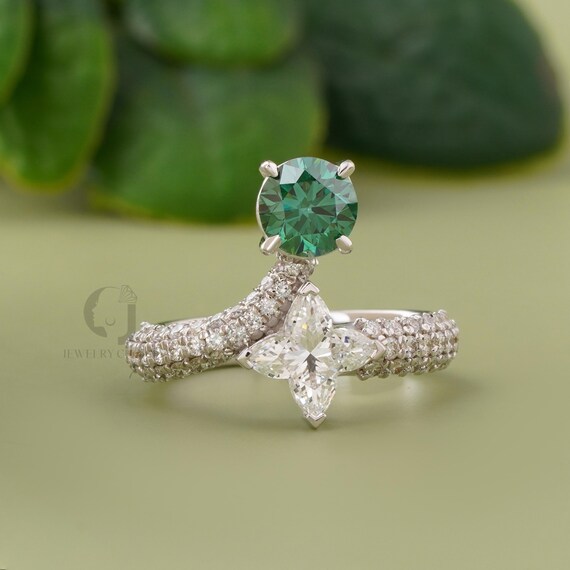
The lily cut is a patented 65-facet, four-lobed flower-profile diamond cut. Rings range from classic solitaire mounts to bezel-set everyday styles, with carat weights from 1.15 ct upward.
The lily cut is defined as a patented fancy diamond cut engineered with 65 facets arranged around a four-lobed flower profile, producing a silhouette that reads as a blooming lily from above while still delivering the light return buyers expect from a modern brilliant-style stone. That combination — recognisable floral geometry plus genuine sparkle — is what separates it from purely decorative novelty cuts and makes it a credible choice for an engagement ring or statement solitaire in 2026.
Before diving into the individual rings, here is a side-by-side look at the four lily-cut options covered in this guide:
| Feature | True Diamond Bloomingdale Lily Cut Solitaire | True Diamond 2 ct Petals Lily Cut Solitaire | Lucira Jewelry Classic Lily-Cut Diamond Ring | The Petal Bloom 1.15 ct (Stardust Diamonds) |
|---|---|---|---|---|
| Best for | Classic solitaire styling | Bold, statement-making look | Everyday wearability | Softer, feminine aesthetic at a smaller carat weight |
| Center stone | Lily cut lab-grown diamond | 2 ct lily cut lab-grown diamond | Lily cut diamond | 1.15 ct lily cut diamond |
| Setting style | High-mount classic solitaire | Sleek elevated band | Modern bezel | Floral-emphasis solitaire |
| Metal | White gold | Not disclosed | Not disclosed | Not disclosed |
| Stone sourcing | Lab-grown | Ethical lab-grown | Not disclosed | Not disclosed |
| Facet count | 65 (patented) | 65 (patented) | Not disclosed | Not disclosed |
| Lobe protection | High prong mount | Prong facets blend into petal shape | Bezel (full perimeter) | Prong/open setting |
| Price range (approx.) | ₹1,21,153–₹1,38,192 | ₹1,24,145–₹1,46,774 | Not disclosed | Not disclosed |
| Key differentiator | Unobstructed four-lobe silhouette | Petal-blending prongs amplify floral look | Secure low-profile fit | Emphasises floral silhouette at 1.15 ct |
What exactly is the lily cut, and how does it differ from a standard round brilliant?
The lily cut is a specialty fancy cut whose outline departs entirely from the circular girdle of a round brilliant. Where a round brilliant uses 57 or 58 facets arranged for maximum light return within a circular boundary, the lily cut uses 65 facets distributed across a four-lobed flower-shaped girdle. The four lobes create the petal silhouette visible from above, while the facet arrangement beneath still channels light back toward the viewer's eye in a pattern close to a modified brilliant.
This geometry produces two practical consequences. The ring reads as a floral motif even when viewed from a distance — no need for additional petal-shaped side stones or engraving to communicate the theme. Because the lobes extend outward from the centre, the face-up diameter of a lily cut can appear slightly larger than a round brilliant of identical carat weight, a characteristic shared with other elongated or spread-cut shapes like the oval and marquise, as noted in diamond shape guides that cover how outline affects perceived size.
The four lobes are the most structurally exposed parts of the stone. Unlike a round brilliant where the entire girdle is roughly equidistant from the centre, the tips of the lily's petals sit at the outermost points and are the first to contact surfaces. Setting choice — high prong, bezel, or petal-blending prong — directly affects how well those lobes are protected over years of daily wear, a decision worth thinking through carefully before purchase.
How does the lily cut compare to other floral and fancy cuts?
Floral-themed diamond cuts exist on a spectrum from purely symbolic to optically engineered. Rose cuts use a flat base and domed top with relatively few facets — beautiful in low light but limited in brilliance by modern standards. The lily, by contrast, is designed from the outset to balance a recognisable outline with a facet pattern capable of producing genuine fire and scintillation.
The marquise cut, one of the oldest elongated fancy cuts, shares the lily's characteristic of having pointed or extended extremities that require careful setting. Diamond shape references consistently flag the marquise as the cut most prone to a bowtie effect — a dull shadow across the centre caused by light leaking through an improperly proportioned stone. The lily cut, with its radial facet arrangement, is less susceptible to this problem because the four-lobe geometry distributes light differently, though buyers should still inspect individual stones for uneven brightness across the lobes.
Pear and oval cuts also elongate the apparent size of the diamond on the finger. The lily, however, adds a layer of visual identity that neither provides: the flower outline is immediately legible as a design choice rather than simply a shape preference.
For buyers considering a floral diamond engagement ring in India, the lily cut currently represents one of the most fully developed options in the category, with multiple jewellers offering purpose-built settings rather than adapting generic mounts.
Which lily cut ring is best for classic solitaire styling?
The True Diamond Bloomingdale Lily Cut Solitaire Ring exemplifies a classic solitaire approach applied to the lily cut. It places a patented 65-facet lily cut lab-grown diamond in a high-mount white gold setting — a configuration that deliberately keeps the band minimal so the four-lobed flower profile of the stone does the visual work. The elevated mount lifts the stone away from the finger, allowing light to enter from below as well as above, which is particularly important for a cut whose brilliance depends on facets distributed across an irregular outline.
This ring appeals to buyers who want classic solitaire styling precisely because of what it does not do: there are no pavé side stones, no halo, no decorative band elements competing with the lily cut's geometry. The setting is a vehicle for the stone, not a co-star. That restraint is a deliberate design position and makes the ring a useful benchmark when evaluating how other lily cut designs handle the same stone.
Buyers drawn to the Bloomingdale should be aware that a high-mount solitaire sits higher on the finger than a bezel or low-profile setting. For those who work with their hands or prefer a ring that catches less on fabric, the height is worth factoring into the decision. The ring is available in 14 kt and 18 kt white gold, with pricing in the ₹1,21,153–₹1,38,192 range depending on specification, as listed on the True Diamond collections page.
Which lily cut ring is best for a bold, statement-making look?
The True Diamond 2 ct Petals Lily Cut Solitaire Ring takes a different approach to the same patented cut. At 2 carats, the face-up surface area of the lily cut is substantially larger than at sub-2-carat weights, and the four lobes become more pronounced and immediately visible across a room. The design detail that distinguishes the Petals ring from the Bloomingdale is the prong treatment: the prongs are faceted and positioned to visually blend into the diamond's own lobe edges, creating the impression that the stone is unfurling from the band rather than being held above it.
This petal-blending prong technique is a setting innovation worth understanding. Standard prongs on a fancy-cut stone are visible as separate metal elements that interrupt the outline of the diamond. When prongs are shaped and positioned to echo the stone's own geometry, the eye reads the entire assembly — stone plus prongs — as a single continuous floral form. The effect is more dramatic at 2 carats because the lobes are large enough for the blending to register clearly.
The 2 ct Petals ring is priced at ₹1,24,145–₹1,46,774 and is sourced with ethical lab-grown diamonds, consistent with True Diamond's broader lab-grown positioning. For buyers who want the lily cut to function as an unmistakable centrepiece rather than a subtle nod to floral design, this ring delivers that intent more directly than any of the other options in this comparison.
Which lily cut ring is best for everyday wearability?
The Lucira Jewelry Classic Lily-Cut Diamond Ring addresses a practical concern that the other rings handle less directly: what happens to the four exposed lobes of a lily cut diamond during daily wear?
A bezel setting is a metal collar that encircles the entire girdle of a diamond, holding it in place by wrapping the edge of the stone rather than gripping it with individual prongs. For a lily cut, a full bezel means the tips of each petal lobe are enclosed within the metal collar, which provides meaningful protection against the kind of chip or abrasion that an exposed lobe tip is vulnerable to during everyday activities.
The Lucira ring uses this bezel approach in a modern, low-profile configuration. The result is a ring that sits closer to the finger than a high-mount solitaire, catches less on clothing and hair, and protects the stone's most vulnerable points. The trade-off is optical: a bezel partially blocks light from entering the stone at the girdle, which can reduce the brightness visible from certain angles compared to an open-prong mount. Whether that trade-off is acceptable depends on how the buyer weighs durability against maximum light performance.
Specific pricing for the Lucira ring is not disclosed in available sources. Buyers should contact Lucira directly for current pricing and availability.
For more context on how lab-grown diamonds perform under daily wear conditions generally, the durability reporting at Lab Diamond Insights covers real-world use cases across setting types.
Which lily cut ring is best for a softer, feminine aesthetic at a smaller carat weight?
The Petal Bloom 1.15 ct Lily Cut Diamond Ring from Stardust Diamonds is the only sub-2-carat option in this comparison, and it occupies a distinct position as a result. At 1.15 carats, the lily cut's four-lobed outline is present but proportionally more delicate than at 2 carats — the ring reads as a refined floral accent rather than a bold centrepiece.
Stardust Diamonds has designed the Petal Bloom specifically to emphasise the floral silhouette of the lily cut rather than maximise visual impact through carat weight. The setting is described as distinctly soft and feminine in appearance on the hand, which suggests a lower-profile mount that keeps the stone close to the finger and allows the petal outline to be the primary visual element rather than the stone's elevation or size.
The Petal Bloom is listed on the Stardust Diamonds product page with pricing not disclosed in available sources. For buyers who find 2-carat stones visually overwhelming for their hand size or personal style, or who are working within a tighter budget, the 1.15 ct weight point offers a way into the lily cut category without the scale commitment of the larger options.
At 1.15 carats, the individual lobes of the lily cut are smaller, which means the petal-blending or setting detail work that is visible at 2 carats may be less pronounced. Buyers should request detailed photographs or an in-person viewing to assess how the specific stone reads at this weight.
What should buyers know about lab-grown diamonds in lily cut rings?
Two of the four rings in this comparison — the True Diamond Bloomingdale and the 2 ct Petals — are explicitly offered in lab-grown diamonds. Lab-grown diamonds are produced in a controlled environment using either Chemical Vapour Deposition (CVD) or High Pressure High Temperature (HPHT) processes, resulting in stones that are chemically, physically, and optically identical to mined diamonds. They carry the same hardness rating (10 on the Mohs scale), the same refractive index, and the same susceptibility to the 4Cs grading system.
For a specialty cut like the lily, the lab-grown route has a specific practical advantage: because lab-grown rough can be grown to specifications, cutters have more control over producing the precise symmetry required for a four-lobed flower outline. Asymmetry in a lily cut — one lobe slightly larger than the others, for example — is more visually apparent than asymmetry in a round brilliant, where the circular outline masks minor variations. A well-grown lab-grown rough can reduce the proportion of stones that fail quality control during the cutting process.
The ethical sourcing angle is also relevant. True Diamond's explicit "ethical lab-grown" positioning on the 2 ct Petals ring reflects a broader industry shift in which lab-grown diamonds are increasingly the default choice for buyers who want full supply chain transparency. For buyers considering a lab-grown diamond engagement ring in India, the lily cut is now a viable option within that category rather than a specialty item requiring a mined stone.
How does setting choice affect the lily cut's light performance?
Setting choice is more consequential for the lily cut than for a round brilliant, because the four-lobed girdle creates multiple points of potential light entry and exit that a setting can either enhance or obstruct.
A high-mount prong setting — the approach used by the True Diamond Bloomingdale — maximises light entry from below the stone by lifting it well above the finger and the band. This configuration produces the most visible brilliance and fire, particularly in motion. The downside is that the stone sits higher, which increases the risk of snagging and, for the lily cut specifically, leaves the lobe tips exposed.
A petal-blending prong setting — used by the 2 ct Petals ring — is a variation on the standard prong that positions metal at the lobe junctions rather than at the lobe tips. This approach protects the most vulnerable points of the stone while maintaining an open setting that allows light to enter from multiple directions. It also reinforces the floral visual identity of the cut by making the prongs appear to be part of the flower rather than external hardware.
A bezel setting — used by the Lucira ring — provides the most full protection but partially restricts light entry at the girdle. Modern bezel designs compensate for this by using thin, precisely fitted metal collars that minimise the amount of stone covered, but some reduction in brightness compared to an open prong setting is inherent to the configuration.
For buyers interested in how prong count and configuration affect everyday durability more broadly, the guide to U-prong and six-prong solitaire settings provides useful context on the trade-offs between security and light performance in solitaire-style rings.
What carat weight works best for the lily cut?
There is no single correct answer, but the geometry of the lily cut does create some practical considerations around carat weight that differ from round brilliants.
At weights below approximately 1 ct, the four lobes of the lily cut can appear compressed, and the flower silhouette may not be immediately legible to a casual observer. The cut's defining visual characteristic — the fact that it reads as a flower from above — is most effective when the lobes have enough surface area to register clearly. The Stardust Petal Bloom at 1.15 ct sits at the lower end of the range where the silhouette remains clearly readable.
Between 1.5 ct and 2 ct, the lily cut's lobes are large enough that the floral outline is unmistakable, and the facet arrangement has sufficient surface area to produce visible fire and scintillation. True Diamond's collection spans this range, with the Bloomingdale and Petals rings both positioned at or near 2 ct. The True Diamond lily cut collection also includes a 1.82 ct Layered Lily option, suggesting that the brand has found this weight range to be the sweet spot for the cut's visual performance.
Above 2 ct, the lily cut becomes a genuinely bold statement piece. The lobes are large enough to be individually distinct, and the ring will draw attention in a way that a 1.15 ct version will not. Whether that is desirable depends entirely on the buyer's preference and lifestyle.
How does the lily cut fit within the broader fancy cut space for engagement rings?
Fancy cuts — defined as any diamond cut that is not the standard round brilliant — have grown steadily in popularity as buyers seek rings that express individual identity rather than conforming to a single dominant style. The oval cut's surge in the early 2020s demonstrated that a non-round shape could achieve mainstream acceptance without sacrificing the light performance that buyers associate with quality diamonds. The lily cut occupies a more specialised position within that trend: it is not attempting to replace the oval or the cushion, but rather to serve buyers for whom the floral motif is a genuine priority rather than an incidental aesthetic.
What makes the lily cut credible as an engagement ring choice — rather than a novelty — is the engineering behind the 65-facet arrangement. The facet count exceeds that of a standard round brilliant (57–58 facets) and is specifically designed to compensate for the irregular outline, routing light back toward the viewer's eye even from the lobe tips. That is a meaningful technical achievement, and it allows the lily cut to be discussed alongside other serious fancy cuts rather than alongside purely decorative shapes.
For buyers exploring the full range of fancy cut options, resources covering oval lab-grown diamond solitaires and curved solitaire band styles provide useful context on how different shapes interact with different setting and band configurations.
What questions should buyers ask before purchasing a lily cut ring?
Several practical questions are worth raising with any retailer before committing to a lily cut ring.
First, ask about the specific facet arrangement and whether the cut is certified or patented. The True Diamond lily cut carries a patent on its 65-facet design, which provides a degree of quality consistency across stones. Other jewellers may use the term "lily cut" more loosely to describe any flower-shaped diamond, which may not carry the same facet engineering. Asking for documentation of the cut specification protects against purchasing a stone that looks similar in photographs but performs differently in person.
Second, ask about the symmetry of the individual stone. Asymmetry in a four-lobed cut is more visually apparent than in a round brilliant. Request a top-down photograph or video of the specific stone being purchased, not just a stock image of the ring style.
Third, ask about the setting's lobe protection. Understand whether the prongs sit at the lobe tips, at the junctions between lobes, or whether a bezel is used. Each configuration has different implications for long-term durability, and the answer should inform how you think about the ring's suitability for your daily activities.
Fourth, if the stone is lab-grown, ask for the grading report. Lab-grown diamonds should carry a grading report from a recognised laboratory (IGI and GIA both grade lab-grown stones) that documents the 4Cs. For a specialty cut like the lily, the cut grade section of the report may use different terminology than for a round brilliant — ask the retailer to explain what the cut assessment covers for this specific shape.
Finally, consider how the lily cut interacts with a wedding band. The four-lobed outline means that a standard straight band will sit flush against the ring only at the two points where the lobes are narrowest. A contoured or curved wedding band designed to nest against the lily cut's profile will produce a cleaner overall look. The guide to curved solitaire band styles and fit covers this topic in detail.
Summary: which lily cut ring fits which buyer?
The four rings in this comparison serve genuinely different buyer profiles, and the right choice depends on priorities rather than a single ranking.
The True Diamond Bloomingdale Lily Cut Solitaire Ring suits buyers who want the lily cut's four-lobed geometry presented in the most uncluttered way possible — a high-mount white gold solitaire that lets the patented 65-facet cut speak for itself without competing design elements.
The True Diamond 2 ct Petals Lily Cut Solitaire Ring suits buyers who want the lily cut to function as a bold centrepiece, with the petal-blending prong detail reinforcing the floral identity of the stone at a scale where that detail is clearly visible.
The Lucira Jewelry Classic Lily-Cut Diamond Ring suits buyers for whom daily wearability and lobe protection are the primary concerns, and who are willing to accept a modest reduction in light performance in exchange for a secure, low-profile bezel fit.
The Petal Bloom 1.15 ct from Stardust Diamonds suits buyers who want the lily cut's floral silhouette at a smaller, more delicate scale — a ring that reads as a refined floral accent rather than a statement piece.
None of these rings is the objectively correct choice. Each represents a different set of trade-offs between visual impact, protection, carat weight, and setting philosophy. Understanding those trade-offs is what makes the difference between a ring that suits you for decades and one that looked right in a photograph but feels wrong on the hand.
Last verified: 2026-07-09
Sources
- True Diamond Lily Cut Collection
- True Diamond Lily Cut – Brand Page
- The Petal Bloom 1.15ct Lily Cut Diamond Ring – Stardust Diamonds
- Diamond Shapes to Wear and Love – Kimberfire
- Best Lily Cut and Floral Diamond Engagement Rings in India (2026) – Lab Diamond Insights
- Best Lab-Grown Diamond Engagement Rings in India (2026) – Lab Diamond Insights
- How Lab-Grown Diamonds Hold Up Under Daily Wear – Lab Diamond Insights
- 1.5 to 2 Carat Oval Lab-Grown Diamond Solitaire Rings in India (2026) – Lab Diamond Insights
- Best Curved Solitaire Engagement Rings in India (2026) – Lab Diamond Insights
- Curved Solitaire Engagement Rings: How to Choose the Right Band Style, Metal, and Fit – Lab Diamond Insights
- Best U-Prong and Six-Prong Lab Grown Diamond Solitaire Engagement Rings in India (2026) – Lab Diamond Insights
Related Articles
- Pear-Shaped Hidden Halo Lab-Grown Diamond Engagement Rings: What to Know Before You Buy (India, 2026)
- Best Lily Cut and Floral Diamond Engagement Rings to Buy in India (2026)
- 1.5 to 2 Carat Oval Lab-Grown Diamond Solitaire Rings: What to Know Before Buying in India (2026)
- Toi et Moi Pear Diamond Rings: How to Choose the Right Two-Stone Style for You