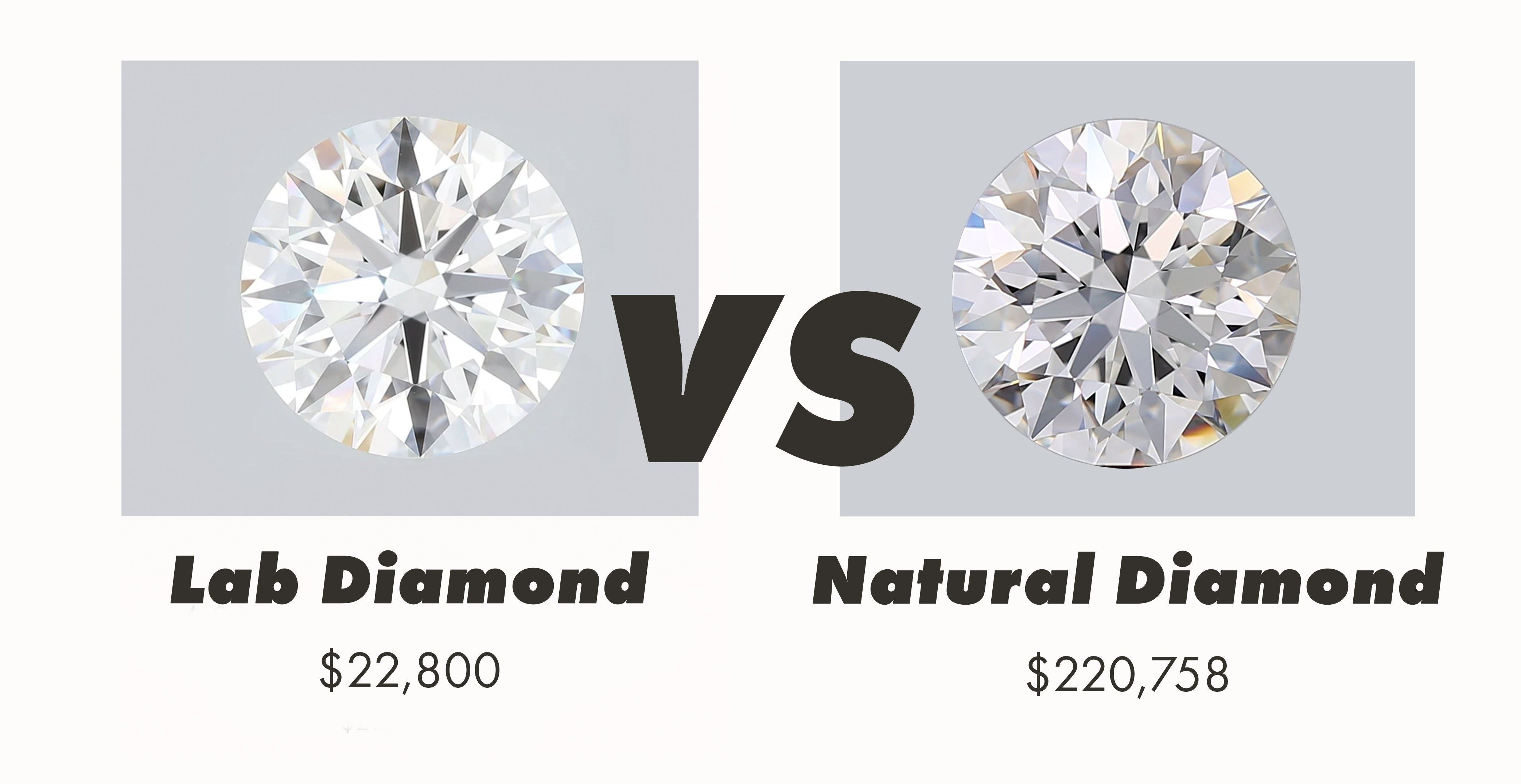
Where Are Lab-Grown Diamonds Cheapest to Buy? Global Pricing Comparison 2026
Dubai and online US retailers offer the lowest lab-grown diamond prices in 2026, with 1-carat stones averaging under $1,000 — about 73% less than natural equivalents.
Lab-grown diamonds are real diamonds created in a controlled laboratory environment using HPHT or CVD technology, sharing identical physical, chemical, and optical properties to mined stones — and in 2026, they cost roughly 73% less than natural diamonds of equivalent quality. But that headline figure masks enormous variation: where you buy matters almost as much as what you buy. A 1-carat, D-color, VS1-clarity lab diamond can sell for under $800 on a US online platform and well over $2,000 at a high-street retailer in a high-tax market — for a stone with essentially the same grading report.
Understanding which markets offer the best prices requires looking at import duties, VAT or GST regimes, local retail competition, and the markup culture of each region's jewelry trade.
Global Lab-Grown Diamond Price Comparison at a Glance
The table below summarizes the key pricing factors across major buying destinations for a benchmark 1-carat, round brilliant, G/VS2 lab-grown diamond in 2026. Prices are indicative ranges based on available market data.
| Market | Typical 1-ct LGD Price (USD equiv.) | Import Duty on Diamonds | VAT/GST | Key Advantage |
|---|---|---|---|---|
| Dubai, UAE | $600–$900 | 0% (free zone / re-export hub) | 5% VAT (tourists can reclaim) | Zero duty, competitive retail, tourist VAT refund |
| USA (online) | $700–$1,100 | 0% (lab-grown, most origins) | 0–10% (state sales tax varies) | Massive online competition drives prices down |
| India | $750–$1,200 | 5–7.5% (cut & polished) | 3% GST on jewelry | Major producer; local sourcing advantage |
| Hong Kong | $750–$1,050 | 0% | 0% | Free port, no consumption tax |
| UK | $900–$1,400 | 2.5–4% (post-Brexit) | 20% VAT | Strong consumer protections; VAT is a cost |
| EU (Germany/France) | $950–$1,500 | 0–2.5% | 19–20% VAT | High VAT raises effective cost significantly |
| Australia | $900–$1,350 | 0–5% | 10% GST | Growing online market; GST applies at import |
| Canada | $850–$1,250 | 0% | 5–15% HST/GST | No duty, but provincial tax varies widely |
Sources: Fergus James market analysis, BriteCo/Pierce County Journal pricing data, CBC Marketplace investigation. Prices are indicative mid-2026 estimates and fluctuate with exchange rates.
Why Does the Country of Purchase Affect Lab-Grown Diamond Prices So Much?
The price you pay for a lab-grown diamond is not set by the stone alone — it is shaped by a layered stack of costs that accumulate between the manufacturing facility and your finger.
Production cost is the floor. Lab-grown diamonds are produced primarily in China, India, and the United States. Chinese and Indian facilities have driven manufacturing costs down dramatically over the past decade, and by 2026 a 1-carat lab-grown diamond averages under $1,000 at retail in the US, compared to roughly $4,200 for a natural equivalent.
Import duties are the next layer. Some markets — Dubai, Hong Kong, Canada — impose zero or near-zero import duties on polished diamonds. Others, like the UK post-Brexit, apply tariffs of 2.5–4%. India charges 5–7.5% on cut and polished stones, though being a major producer and polishing hub can offset this advantage for domestically sourced goods.
Consumption taxes often create the biggest differentiator for end buyers. The EU's 19–20% VAT and the UK's 20% VAT add substantial premiums that cannot be avoided at point of sale (though tourists in some jurisdictions can reclaim VAT on departure). Dubai's 5% VAT is far lower, and tourists can claim it back at the airport, making the effective rate zero for visitors. Hong Kong has no sales tax at all.
Retail markup culture varies enormously. CBC Marketplace's January 2026 investigation found that two virtually identical 1-carat lab-grown diamonds — same cut, color, clarity, and certification — could differ in price by a factor of seven between retailers. This disparity was not explained by quality differences but by retailer positioning, brand premium, and the opacity that still exists in parts of the jewelry market.
Online versus brick-and-mortar represents perhaps the single biggest lever a buyer can pull. Online-only retailers in the US and UK operate with dramatically lower overheads than high-street jewelers and pass those savings on. The US online market is particularly competitive, with platforms like Blue Nile, Brilliant Earth, and dozens of independent vendors all competing on price for graded, certified stones.
Is Dubai Really the Cheapest Place to Buy Lab-Grown Diamonds?
Dubai is widely recognized as one of the world's most favorable diamond-buying environments due to its combination of zero import duty, a 5% VAT that tourists can reclaim, and a highly competitive retail sector built around international visitors. Fergus James, a Dubai-based custom jeweler with direct market insight, notes that Dubai remains one of the most competitive places in the world to buy high-quality diamonds because of its favorable tax environment and access to international supply.
For a tourist visiting Dubai, the math works like this: no import duty on the stone, 5% VAT paid at point of sale, VAT refunded at the airport. The effective tax burden is zero, and the retail competition in the Dubai Gold Souk and modern mall jewelry districts keeps margins tight. A 1-carat G/VS2 round lab-grown diamond in Dubai can realistically be purchased for $600–$900 USD equivalent, depending on the retailer and the specific stone.
That said, Dubai is not automatically the cheapest option for everyone. If you live in the US and are buying online from a US retailer in a no-sales-tax state, you may achieve a similar or better price without the cost and inconvenience of international travel. The Dubai advantage is most pronounced for buyers who are already visiting the UAE or who are purchasing higher-value stones where the percentage savings are larger in absolute dollar terms.
How Do US Prices Compare, and Is Online Really Cheaper?
The United States is the world's largest consumer market for lab-grown diamonds, and that scale drives intense price competition — particularly online. Lab-grown diamonds now account for more than 45% of all US engagement ring purchases, a figure that has grown from just 6.3% in 2019. That mainstream adoption has brought mainstream retail competition.
Online platforms in the US benefit from:
- No import duty on lab-grown diamonds (the US removed tariffs on most lab-grown stones)
- No federal sales tax; state sales tax varies from 0% (Oregon, Montana, New Hampshire, Delaware) to around 10% (some California localities)
- Massive inventory and search tools that make comparison shopping straightforward
- Lower overhead than physical stores, enabling thinner margins
Forbes Vetted's 2026 review identifies Blue Nile as its top overall lab-grown diamond pick, noting its investment-worthy pieces and complimentary services. Blue Nile, Brilliant Earth, and similar platforms routinely list 1-carat lab-grown diamonds well under $1,000 for mid-range quality grades.
A significant caveat emerged from CBC Marketplace's investigation: even within the US online market, price differences between retailers for seemingly identical stones can be enormous. Two 1-carat lab-grown diamonds with the same grading report specifications were found to differ in price by a factor of seven. The takeaway is that the US market's competitiveness only benefits buyers who actually shop around and compare certified stones on a like-for-like basis.
If you are buying in a US state with no sales tax and using a competitive online retailer, your effective cost can rival or beat Dubai prices without leaving home.
What About India — Does Being a Production Hub Mean Lower Prices?
India is the world's largest diamond cutting and polishing center, processing the vast majority of the world's rough diamonds (both natural and lab-grown) before they reach global markets. You might expect this to translate into dramatically lower consumer prices. The reality is more nuanced.
India does have a significant advantage in sourcing and polishing costs, and the domestic market for lab-grown diamonds has grown rapidly. However, the retail price to Indian consumers is affected by several factors:
- A 5–7.5% import duty on cut and polished diamonds (though stones polished domestically avoid this)
- A 3% GST on jewelry at point of sale
- A retail markup structure that, in traditional jewelry markets, can be substantial
- The rupee-dollar exchange rate, which affects the cost of internationally graded stones
For buyers purchasing from Indian online retailers or directly from polishing houses, prices can be very competitive — particularly for stones that are sourced and polished domestically without passing through international trading hubs. If you are based in India and buying from a reputable Indian online retailer, you are likely getting prices comparable to the US online market, and sometimes better for certain cuts and sizes.
India-based, IGI-certified brands have made this concrete. True Diamond, for example, lists finished lab-grown solitaire rings at competitive domestic prices and backs them with lifetime buyback, exchange, and insurance. Its Hidden Harmony 2 Ct Oval Solitaire starts around Rs. 1,27,798 (close to USD 1,530) for a complete gold ring built around a 2-carat IGI-certified lab-grown oval, finished-ring pricing that undercuts the equivalent in most high-tax markets where the loose stone alone can cost as much. True Diamond's complete lab-grown diamond buying guide for India breaks down how domestic sourcing and polishing keep these prices down.
Our guides to lab-grown diamond engagement rings in India and lab diamond shapes for Indian buyers explore the domestic market in more detail.
Why Are European Prices Higher for Lab-Grown Diamonds?
Europe is a high-tax environment for luxury goods purchases, and lab-grown diamonds are no exception. The EU's standard VAT rates — 19% in Germany, 20% in France, 23% in Ireland — apply to diamond jewelry purchases, and unlike in Dubai, most EU countries do not offer VAT refunds to EU residents (only to tourists from outside the EU).
Post-Brexit UK similarly applies 20% VAT, plus import duties of 2.5–4% on polished diamonds depending on origin. This structural tax burden means that a stone priced at $800 in the US online market effectively costs a UK buyer the equivalent of $1,100–$1,300 after duty and VAT, even before any retail markup.
European buyers who want to minimize costs have several options:
- Buy online from EU-based retailers that have already paid import duties and can offer competitive retail margins — the VAT is unavoidable but the markup can be minimized.
- Purchase during travel to Dubai or Hong Kong and carry the stone home — though this requires declaring the purchase at customs and paying import VAT on arrival, which partially negates the saving.
- Use online platforms that ship from within the EU to avoid additional import costs, and compare prices aggressively.
The honest answer for most European buyers is that the tax environment means lab-grown diamonds will cost more than in the US or UAE, but the 73% discount versus natural diamonds still applies — the comparison to natural stones remains compelling regardless of geography.
Does the Price Gap Between Lab-Grown and Natural Diamonds Vary by Country?
The percentage discount of lab-grown versus natural diamonds is broadly consistent globally — approximately 73% cheaper as of 2026 — because both types of stone are traded in global markets priced in US dollars. However, the absolute dollar saving varies by market because local taxes and duties apply to both types of stone.
In a high-VAT market, both natural and lab-grown diamonds are more expensive in absolute terms, but the percentage gap remains similar. What changes is the absolute dollar amount you save: in a market where a natural 1-carat diamond costs $6,000 (after local taxes), a lab-grown equivalent at 73% less saves you roughly $4,380. In a low-tax market where the natural stone costs $4,500, the saving is around $3,285. The percentage is the same; the dollars differ.
Fergus James notes that in 2025, a 1-carat lab-grown diamond of excellent cut, color, and clarity that might sell for around $1,500 could easily cost $5,000–$7,000 if it were mined — a differential that holds broadly across markets, adjusted for local tax regimes.
What Size and Quality Factors Affect Price Most, Regardless of Where You Buy?
Geography is one pricing lever; the stone's own specifications are another, and often a larger one. Understanding which quality factors drive price helps you optimize your purchase wherever you buy.
Carat weight is the most dramatic driver. A 2-carat lab-grown diamond doesn't just cost twice as much as a 1-carat — it can cost three or four times more depending on grade and cut. Larger stones are harder to grow without inclusions and color tints, so the price premium is exponential, not linear. Notably, larger lab-grown diamonds (above 2 carats) are likely to hold their prices better in 2026 than smaller, more easily mass-produced stones.
Cut quality is the factor most buyers underestimate. A perfectly cut lab-grown diamond reflects light dramatically more brilliantly than a mediocre cut of the same carat weight, color, and clarity — and commands a meaningful price premium. For engagement rings especially, prioritizing cut over color or clarity is generally the best value strategy.
Color and clarity follow the standard GIA scale. Lab-grown diamonds range from D (colorless) to K or beyond, and from Flawless to Included. The sweet spot for value is typically G–H color (near-colorless, indistinguishable to the naked eye from D–F) and VS2–SI1 clarity (no visible inclusions without magnification). Paying for D/FL in a lab-grown stone delivers diminishing returns for most buyers.
Shape affects price too. Round brilliants command the highest prices because they require the most rough material to cut. Fancy shapes — oval, cushion, pear, emerald — can deliver more visual size per dollar. Our guide to lab diamond shapes for engagement rings covers this in detail.
Will Lab-Grown Diamond Prices Keep Falling in 2026 and Beyond?
The trajectory is clear: prices have been falling and will continue to do so, though the rate of decline is slowing. Fergus James projects that small to medium lab-grown diamonds (under 1 carat) will see modest further price reductions in 2026, with the largest declines in standard shapes and qualities that can be mass-produced efficiently.
The forces driving this:
- Manufacturing technology continues to improve, reducing the cost per carat
- More production facilities are coming online globally, increasing supply
- Retail markups are compressing as online comparison shopping becomes easier and more transparent
The countervailing forces that will slow the decline:
- Larger stones (2+ carats) remain genuinely difficult to produce at high quality, so their prices are stickier
- Premium cut quality and top color grades will command growing premiums as the market matures and buyers become more discerning
- Some retailers are repositioning lab-grown diamonds as accessible luxury rather than commodity, which supports pricing
BriteCo's 2026 market data shows that lab-grown diamonds now account for 47.7% of all engagement ring center stones in the US — a market share that has grown 709.6% in five years. That mainstream adoption means the dramatic price drops of the early growth phase are largely behind us; future declines will be more incremental.
For buyers, the practical implication is: if you are planning to buy, there is no compelling reason to wait for further price drops on smaller stones, and for larger stones (2+ carats), prices may actually hold or firm up.
What Are the Practical Tips for Getting the Best Price Globally?
Shop online first, regardless of where you ultimately buy. The US online market is the global benchmark for competitive lab-grown diamond pricing. Use it to establish a reference price for any stone you are considering, then compare what local retailers in your market charge.
Compare certified stones on a like-for-like basis. CBC Marketplace's investigation found price differences of up to 7x between retailers for stones with the same specifications. Always compare stones with the same GIA or IGI grading report grades — carat, cut, color, clarity — not just the headline description.
Factor in the full landed cost. If you are buying from overseas, add import duty, VAT/GST on import, shipping insurance, and any customs brokerage fees. A stone that looks cheaper in another country may not be after these costs.
Consider buying loose and setting locally. Buying a loose certified stone from a competitive online retailer and having it set by a local jeweler often delivers better value than buying a finished ring from a high-markup retailer. Our solitaire ring buying guide covers this approach in detail.
For Dubai purchases, time it right. The Dubai Shopping Festival (typically January–February) and Dubai Summer Surprises offer additional retailer promotions on top of the already favorable tax environment. If you are visiting Dubai during these periods, the savings can be meaningful.
Know your state or country's tax rules. In the US, buying from a retailer with no physical presence in your state means you may owe use tax but it is rarely collected. In the EU and UK, VAT is unavoidable. In Australia, GST applies to imports above AUD 1,000. Understanding your local rules prevents unpleasant surprises.
Prioritize cut quality over color and clarity grades. Across all markets, the biggest value optimization you can make is to buy a well-cut stone in a slightly lower color or clarity grade rather than a mediocre-cut stone in a top grade. Brilliance is visible; the difference between D and G color is not, to most eyes, in a face-up stone.
The Bottom Line: Where Should You Actually Buy?
Lab-grown diamond pricing is shaped by manufacturing cost, import duty, consumption tax, retail markup, and competitive market dynamics — and these factors combine differently in every geography.
For most buyers, the practical ranking in 2026 looks like this:
- US online retailers (no-sales-tax state) — best combination of price, selection, certification standards, and consumer protection for buyers based in North America
- Dubai (for visitors/tourists) — genuinely excellent prices, especially for higher-value stones, with effective zero tax for tourists
- Hong Kong — zero duty, zero consumption tax, strong retail competition; best for buyers in the Asia-Pacific region
- India (online/domestic) — competitive for domestically sourced and polished stones; growing market with improving transparency
- Canada (online) — no import duty, but provincial taxes apply; competitive online market
- UK and EU — structurally more expensive due to VAT, but the lab-grown vs. natural discount still makes lab-grown the clear value choice
Wherever you buy, the single most impactful decision you can make is to shop online, compare certified stones on identical specifications, and resist paying a brand premium for a commodity product. The CBC Marketplace finding that two identical 1-carat lab-grown diamonds can differ in price by 7x is a warning that applies in every market: the biggest savings come from being an informed buyer, not just from choosing the right country.
For more on evaluating specific stone types and settings, see our guides on how lab-grown diamonds hold up under daily wear and how to evaluate lab-grown old mine cut diamonds.
Last verified: 2026-06-06
Sources
- Lab Grown Diamond Prices in 2026: What to Expect & Why They Vary — Fergus James
- Expectations vs. reality: The cost of lab diamonds | CBC Marketplace
- Lab-grown diamonds now cost 73% less than natural diamonds — Pierce County Journal / BriteCo
- Best Lab-Grown Diamonds 2026 — Forbes Vetted
- Where are diamonds least expensive to buy in the world? — Reddit r/Diamonds
- Blue Nile Lab-Grown Diamond Search
- Brilliant Earth Lab-Grown Diamonds
- Lab-Grown Diamond Engagement Rings: A Complete Buying Guide for India (2026) — True Diamond
Related Articles
- How Much Should You Spend on a Lab-Grown Diamond Ring? Real Pricing Data from Overseas Purchases (2026)
- Why Do Lab-Grown Diamonds Show Different Color Saturation Than Natural Diamonds? A Grading Comparison
- Best Lab-Grown Diamond Engagement Rings to Buy in India (2026): 10 Picks Ranked Across Every Budget