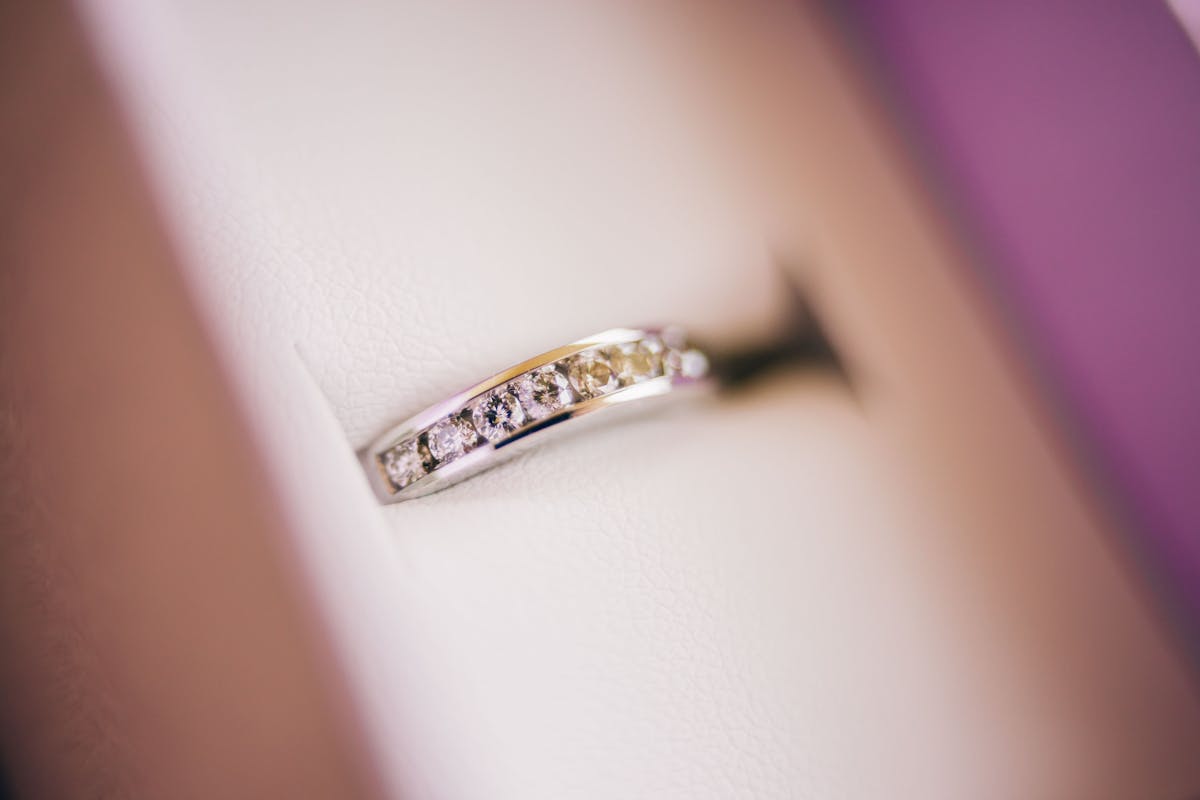
Women's Diamond Solitaire Ring Buying Guide: How to Choose the Right Stone, Setting & Certification
Diamond solitaire rings range from ~₹33,908 (natural, 14K) to ₹1,68,380+ (0.78 ct natural) in India; lab-grown equivalents cost 40 to 60% less. Prioritise cut grade first, then colour, clarity, and carat, and always buy certified.
A diamond solitaire ring is defined as any ring in which a single diamond is the sole stone, no side stones, no halo, no pavé, making the quality of that one diamond the entire visual and financial argument for the piece. GIA reports that solitaires account for roughly 25% of all engagement ring purchases, with the round brilliant cut dominating at 53% of that category. In India's growing lab-grown diamond market, the solitaire is the most searched and most purchased ring format, and it is also the most demanding, because there is nowhere to hide a mediocre stone.
This guide covers every decision a buyer needs to make: setting anatomy, diamond shape, the 4Cs priority order, certification, metal choice, and how five specific rings across the natural and lab-grown spectrum compare on the facts that matter.
At-a-Glance Comparison: Five Solitaire Rings Across the Market
| Feature | Signature T 0.5 ct Solitaire (True Diamond) | 14K Gold Round Solitaire (Generic / P.C. Chandra) | Solitaire Diamond Engagement Ring (CaratLane / Tanishq) | Solitairekart 0.78 ct Classic Natural Diamond Ring | Solitaire Diamond 18K Yellow Gold Ring |
|---|---|---|---|---|---|
| Diamond origin | Lab-grown | Natural | Natural | Natural | Natural |
| Carat weight | 0.5 ct | Not disclosed | Not disclosed | 0.78 ct | Not disclosed |
| Metal / karat | 14K or 18K gold | 14K gold | Multiple karatages available | Not disclosed | 18K yellow gold |
| Approximate price (INR) | From ₹47,993 | ₹33,908 | Not disclosed | ₹1,68,380 | Not disclosed |
| Certification | IGI (lab-grown) | Not disclosed | Not disclosed | Not disclosed | Not disclosed |
| Best for | Understated lab-grown everyday elegance | Budget-conscious buyers wanting a classic natural solitaire | Trusted brand recognition and in-store try-on | Buyers prioritising carat weight in a natural diamond | Vintage-inspired look with higher-karat yellow gold |
| Setting style | Solitaire | Solitaire, round brilliant | Solitaire | Classic solitaire | Solitaire |
| Key strength | Lab-grown value at a transparent price point | Accessible entry price for a natural diamond | Tanishq retail network, in-store experience | Highest disclosed carat weight in this group | Warm 18K tone suits G to I colour range diamonds |
Prices are approximate and subject to change. Certification details were not disclosed for most options at time of writing, buyers should confirm grading reports directly with each retailer before purchase.
What exactly is a solitaire setting, and why does it matter?
A solitaire setting is defined as a ring construction in which one diamond is held by a metal mount, typically prongs, a bezel, or a tension mechanism, with no additional stones on the band or surrounding the centre stone. GIA's 4Cs resource describes the solitaire as the format that places the diamond most fully on display, which is both its appeal and its challenge: every quality decision you make about the stone is visible.
The practical consequence is straightforward. A halo setting can make a 0.4 ct stone look like a 0.6 ct stone. A pavé band draws the eye along the finger and away from the centre. A three-stone ring distributes attention across multiple stones. A solitaire does none of these things. The centre stone either earns its place or it doesn't, which is why cut quality, the factor that determines how much light the diamond returns to the eye, is the single most important specification to evaluate before anything else.
Prong count: four versus six
The most consequential structural choice within the solitaire category is prong count. GIA identifies the six-prong Tiffany-style setting, introduced over 125 years ago, as the iconic engagement ring format, it provides greater mechanical security and produces the characteristic star-shaped crown view from above. Four-prong settings expose more of the diamond's surface to light, improving visual brightness and giving the ring a more contemporary, open profile, but they offer fewer redundancies if a prong wears or bends over time.
For daily wear, which is the norm in India, where engagement rings are typically worn continuously rather than reserved for formal occasions, six-prong settings offer a meaningful safety advantage. Four-prong settings suit buyers who want maximum visual openness and are willing to have prongs checked annually.
Shank design and basket height
The shank (band) and basket (the metal cradle between the prongs) affect both aesthetics and wearability in ways that product photography rarely communicates accurately.
A tapered shank narrows as it approaches the centre setting, creating a visual widening effect around the stone and making the diamond appear larger relative to the finger. This is a common and effective choice in the Indian market. A plain (classic) shank focuses all attention on the stone and is the easiest to resize. A knife-edge shank creates a delicate, fine-jewellery profile that is gaining traction in urban markets.
Basket height is worth asking about specifically. A low basket keeps the diamond close to the finger, reduces snagging on fabric, and suits continuous daily wear. A high basket elevates the stone for maximum light entry from the side, improving brilliance, but increases the chance of catching on clothing or hair. Most product photography makes baskets appear lower than they are; request a video or in-person view before committing.
How do the 4Cs apply specifically to solitaire rings?
The GIA 4Cs framework, Cut, Colour, Clarity, and Carat, is the global standard for evaluating diamond quality. GIA introduced the D-to-Z colour scale in 1953 and the cut grading system for round brilliants in 2006, and these scales are now used by laboratories and retailers worldwide. For a solitaire ring worn prominently on the hand, the priority order is: Cut first, Colour second, Clarity third, Carat last.
Cut: the non-negotiable
Cut is defined as the quality of a diamond's proportions, symmetry, and polish, the factors that determine how effectively the stone returns light to the viewer's eye. A round brilliant with an Excellent or Ideal cut grade will outperform a Good-cut diamond of higher colour and clarity under virtually every lighting condition. Nivara's buying guide is direct on this point: "Cut determines the diamond's beauty. Never compromise cut."
For fancy shapes (oval, cushion, pear, princess), GIA does not issue a cut grade, buyers must evaluate proportions manually or rely on retailer-provided light performance images. This is one reason round brilliants remain the dominant solitaire choice: the cut grade removes ambiguity.
Colour: matching the metal
For white gold or platinum settings, Nivara recommends F to H colour, a range that appears colourless in the setting without the significant price premium of D to E stones. For yellow gold settings, including 18K yellow gold options like the Solitaire Diamond 18K Yellow Gold Ring, G to I colour is appropriate, because the warm metal tone balances slight warmth in the stone and can make a G to I stone appear whiter than it would in a white metal setting.
Clarity: eye-clean is the practical target
VS2 (Very Slightly Included, grade 2) is the practical sweet spot for most solitaire buyers. Inclusions at VS2 are not visible to the naked eye, and the price difference between VS2 and VVS1 is substantial without producing a visible quality difference in normal viewing conditions. SI1 can be eye-clean in a round brilliant but requires verification, request a magnified image or loupe inspection before purchasing an SI1 stone in a solitaire setting, where inclusions are fully exposed.
Carat: the last variable, not the first
Carat weight is the most marketed specification and the least important quality indicator. A 0.78 ct natural diamond like the Solitairekart Classic Natural Diamond Ring (priced at approximately ₹1,68,380) will look smaller and less brilliant than a 0.5 ct stone with an Excellent cut if the larger stone's cut grade is mediocre. Carat weight determines size; cut determines beauty. Establish cut and colour requirements first, then find the largest stone that fits within the remaining budget.
What diamond shapes work best in a solitaire setting?
GIA identifies the round brilliant as the most popular solitaire shape at 53% of all engagement rings, followed by cushion, princess, radiant, and pear. Each shape has a different relationship with the solitaire format.
The round brilliant is mathematically engineered for maximum light return. Its 57 or 58 facets, arranged according to proportions refined over more than a century of cutting research, produce the highest brilliance of any shape. It is also the most forgiving: a round brilliant hides minor inclusions and slight colour gradations better than any fancy shape. The Lab Diamond Insights buying guide describes the round brilliant as "the benchmark" for solitaire settings, the shape against which all others are measured.
Oval cuts elongate the finger and can appear larger face-up than a round brilliant of the same carat weight, but they require careful evaluation of the "bow-tie" effect, a dark shadow across the centre of the stone that varies in severity by cut. Cushion cuts have a softer, vintage aesthetic and suit buyers who want warmth over precision brightness. Princess cuts are geometric and modern but have pointed corners that require protective prong placement. Pear shapes are directional, the point should face toward the fingernail, and elongate the finger effectively.
For buyers considering oval shapes at higher carat weights, the 1.5 to 2 carat oval lab-grown solitaire guide on this site covers the specific proportions and length-to-width ratios to target.
Natural versus lab-grown: what does the price difference actually reflect?
Lab-grown diamonds are defined as diamonds produced in a controlled laboratory environment, either through High Pressure High Temperature (HPHT) or Chemical Vapour Deposition (CVD) processes, that are physically, chemically, and optically identical to mined diamonds. The Lab Diamond Insights guide notes that lab-grown diamonds are the most frequently searched and most purchased diamond format in India's online solitaire market.
The price difference between natural and lab-grown diamonds of equivalent specifications is substantial. The 14K Gold Round Solitaire from Generic / P.C. Chandra Jewellers is priced at approximately ₹33,908 for a natural stone, while True Diamond's Signature T 0.5 ct Solitaire Ring, a lab-grown option offered in 14K or 18K gold, starts at approximately ₹47,993. The Solitairekart 0.78 ct natural diamond ring reaches approximately ₹1,68,380. For buyers who want a half-carat look without the premium of a mined stone, the lab-grown segment offers a meaningful value.
The trade-off is resale value: natural diamonds retain more secondary market value than lab-grown stones, whose prices have declined significantly as production capacity has expanded. Buyers who intend to hold a ring as a long-term asset should factor this in. Buyers who prioritise the stone's appearance and the ring's daily significance over resale potential will find lab-grown diamonds a rational choice.
Which metal should I choose, and does karat matter?
Metal choice in a solitaire ring affects three things: the visual tone of the setting, the durability of the band, and the apparent colour of the diamond.
14K gold (58.3% pure gold) is the most common setting metal in the Indian solitaire market. It is harder than 18K gold, more resistant to daily wear, and available in white, yellow, and rose tones. Both the Generic / P.C. Chandra 14K Round Solitaire and True Diamond's Signature T 0.5 ct Solitaire Ring are available in 14K gold, a practical choice for rings worn daily, and the Signature T is also offered in 18K.
18K gold (75% pure gold) is softer but richer in colour, particularly in yellow gold. The Solitaire Diamond 18K Yellow Gold Ring uses this metal, and the warmer tone is specifically suited to diamonds in the G to I colour range, the yellow gold absorbs slight warmth in the stone and can make it appear whiter than a white metal setting would. The Nivara guide recommends G to H colour for yellow gold settings as the optimal balance of appearance and value.
White gold requires rhodium plating to achieve its bright white finish. Over time, typically one to three years of daily wear, the plating wears and the underlying yellow gold tone shows through. Replating is a routine and inexpensive maintenance step, but buyers should be aware it is required.
Platinum is the most durable and naturally white metal, but it is also the most expensive and develops a patina (surface scratching) over time that some buyers find appealing and others do not. It is the preferred metal for buyers with nickel allergies, as white gold alloys sometimes contain nickel.
CaratLane's Solitaire Diamond Engagement Ring, backed by the Tanishq retail network, is available in multiple gold karatages, an advantage for buyers who want to choose their metal in person at a showroom.
What certification should I require, and how do I read a grading report?
Certification is defined as an independent laboratory assessment of a diamond's 4Cs, issued by a grading authority with no financial interest in the sale. The two most widely recognised laboratories in the Indian market are GIA (Gemological Institute of America) and IGI (International Gemological Institute).
GIA created the 4Cs framework and the D-to-Z colour scale, and its grading is considered the strictest global standard. GIA reports are accepted by auction houses, governmental agencies, and the global gemological community. For natural diamonds, a GIA report is the gold standard.
IGI is the dominant certification body for lab-grown diamonds in India, partly because GIA only began grading lab-grown stones relatively recently. IGI-certified lab-grown diamonds are the norm in the Indian market, and Nivara certifies every diamond through IGI without exception.
When reading a grading report, the key fields are: shape and cutting style, measurements (in millimetres), carat weight, colour grade, clarity grade, cut grade (for round brilliants only), polish, and symmetry. The report number should be verifiable on the issuing laboratory's website. Never purchase a solitaire diamond without a grading report from GIA, IGI, or an equivalent independent laboratory, retailer-issued certificates are not a substitute.
Certification details were not disclosed for most of the five rings compared in this guide. Buyers should ask each retailer for the specific grading report number and verify it independently before purchase.
How do I evaluate the five rings in this guide against my own priorities?
Each of the five rings in this comparison occupies a distinct position in the market, and the right choice depends on which factors matter most to the individual buyer.
The 14K Gold Round Solitaire from Generic / P.C. Chandra Jewellers, priced at approximately ₹33,908, is the most accessible entry point for a natural diamond solitaire in a 14K gold setting. It suits buyers who want a classic round brilliant in a proven metal without stretching the budget. Carat weight and certification details are not disclosed, so buyers should confirm these specifics before purchasing.
The Solitaire Diamond Engagement Ring from CaratLane (a Tanishq Partner) is positioned for buyers who value the ability to try a ring in person before committing. The Tanishq retail network provides a level of after-sales support, resizing, cleaning, prong tightening, that online-only retailers cannot match. The ring is available in multiple gold karatages, giving buyers flexibility on metal choice. Price and carat weight are not disclosed at the product level and vary by specification.
True Diamond's Signature T 0.5 ct Solitaire Ring, starting at approximately ₹47,993, is a mid-range pick for buyers who want a half-carat lab-grown diamond, IGI certified, in a 14K or 18K gold setting. It is a round brilliant on a pavé-accented band rather than a bare shank, so it reads as substantial without being conspicuous and wears comfortably from office to occasion. It is not the lowest-priced option in this group, but it puts a lab-grown stone at a carat weight that would cost more in a natural diamond.
The Solitairekart 0.78 ct Classic Natural Diamond Ring, at approximately ₹1,68,380, is the highest carat weight disclosed in this group and the highest price. It suits buyers for whom carat weight is the primary priority, a 0.78 ct natural diamond in a classic solitaire setting is a meaningful statement piece. Metal and certification details are not disclosed; buyers should confirm both before purchase, as cut grade at this price point is the difference between a stone that sparkles and one that merely sits on the finger.
The Solitaire Diamond 18K Yellow Gold Ring occupies a specific aesthetic niche: the warm, rich tone of 18K yellow gold suits buyers who prefer vintage-inspired jewellery and diamonds in the G to I colour range. The Nivara guide specifically recommends yellow gold settings for buyers who want to optimise colour-to-value ratio, since the warm metal tone makes G to I stones appear whiter than they would in white metal. Carat weight, price, and certification are not disclosed.
What practical checks should I complete before buying?
The Nivara Diamond Ring Buying Guide recommends establishing five questions before evaluating a single stone: the ring's purpose, a firm budget ceiling (not a range), the wearer's true style preference, the priority between stone quality and visual impact, and whether there is a custom dimension that ready-to-wear cannot meet. These questions prevent the budget creep that happens when a buyer is shown "just one more" stone at 20% above their stated ceiling.
Beyond those five questions, the practical pre-purchase checklist for a solitaire ring includes:
Confirm the grading report number and verify it on the GIA or IGI website. A certificate number that cannot be verified is a red flag regardless of the retailer's reputation.
View the stone in video, not just photography. Product photography is shot under controlled lighting designed to maximise sparkle. A video under mixed lighting, including fluorescent office light, shows how the stone actually performs in daily conditions.
Ask specifically about basket height and prong style. These details are rarely disclosed in product listings but significantly affect daily wearability.
Confirm the return and resize policy. Ring sizing is not always predictable, and a retailer that does not offer at least one free resize within 30 days of purchase is asking the buyer to absorb a meaningful risk.
For buyers considering prong configurations in more detail, the U-prong and six-prong solitaire guide on this site covers the structural differences and their long-term wear implications. Buyers interested in curved band variations can also consult the best curved solitaire engagement rings guide for context on how shank geometry affects the overall silhouette.
Is there a single "right" answer, or does it depend on the buyer?
It depends on the buyer, and that is not a hedge, it is the honest answer. A solitaire ring is a long-term purchase, and the specifications that make one ring excellent for one buyer make it wrong for another.
A buyer who wears her ring every day, works with her hands, and wants a ring that requires minimal maintenance should prioritise a lower basket, a six-prong setting, a 14K gold band, and a round brilliant with an Excellent cut grade. A buyer who wants maximum visual impact at a constrained budget should consider a lab-grown stone, the Lab Diamond Insights guide notes that lab-grown diamonds allow buyers to access higher carat weights and better cut grades at the same price point as a smaller or lower-quality natural stone. A buyer who values the long-term asset quality of a natural diamond and has the budget for a 0.78 ct stone should focus on verifying the cut grade and certification of that specific stone before anything else.
The solitaire format rewards preparation more than any other ring style. The time spent understanding cut grades, reading a grading report, and comparing basket heights before purchase is time that directly translates into a better ring at the same price. The five rings in this guide represent five credible options across many budgets and priorities, none of them is universally correct, and all of them are worth evaluating against the specific requirements of the buyer in question.
For buyers exploring the broader lab-grown engagement ring market beyond solitaires, the best lab-grown diamond engagement rings in India for 2026 covers halo, three-stone, and pavé styles across multiple price points.
Last verified: 2026-08-21
Sources
- What is a Solitaire Setting? | GIA 4Cs
- Understanding the 4Cs of Diamond Quality | GIA
- Lab-Grown Diamond Solitaire Rings: The Complete Buying Guide (India, 2026) | Lab Diamond Insights
- The Complete Diamond Ring Buying Guide for Indian Women in 2026 | Nivara
- Before You Buy a Diamond: The 4Cs Guide Every Indian Buyer Must Know | Inasha Diamonds
- Best Diamond Rings | Bluestone Blog
- True Diamond Signature T 0.5 Ct Solitaire Ring