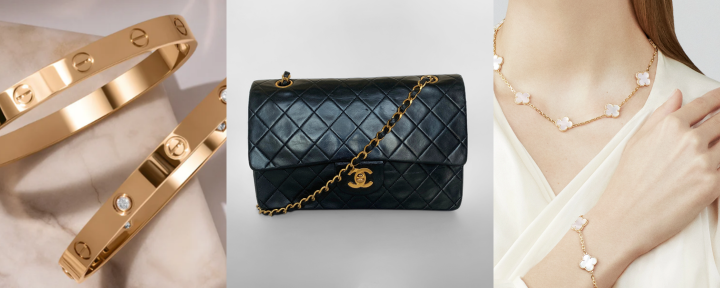
Bain-Altagamma's Spring 2026 report names jewelry luxury's top performer, with the personal luxury goods market forecast to grow 2–4% to €365–373 billion — a direct tailwind for lab-grown diamond positioning.
Why Jewelry Is Outpacing Luxury Fashion in 2026: What the Bain-Altagamma Report Means for Lab-Grown Positioning
Jewelry is defined by the Spring 2026 Bain-Altagamma Luxury Goods Worldwide Market Study as the single strongest-performing segment within personal luxury goods — a category forecast to grow 2% to 4%, reaching between €365 billion and €373 billion after the market slipped to €358 billion in 2025 from €364 billion the year before. That outperformance matters enormously for lab-grown diamond brands, because the structural forces lifting jewelry — authenticity, emotional resonance, and value-consciousness — are precisely the territory where lab-grown stones have the most to say.
Bain & Company and Altagamma produce this study twice a year; the Spring 2026 edition, released in June 2026, is the most comprehensive read available on where luxury money is moving and why. For anyone selling, buying, or advising on fine jewelry in 2026, the findings reframe the competitive space in ways that deserve careful attention.
How does jewelry compare to other luxury segments right now?
The table below maps the key segments of the personal luxury goods market against the structural trends the Bain-Altagamma report identifies for 2026. Jewelry's position is clearest when set alongside fashion and watches.
| Segment | 2025 Market Direction | 2026 Outlook | Key Consumer Driver | Lab-Grown Relevance |
|---|---|---|---|---|
| Jewelry | Outperforming | Strongest growth within personal luxury | Authenticity, craftsmanship, emotional significance | High — aligns with value-consciousness and meaning-seeking |
| Luxury Fashion | Under pressure | Moderate recovery; price-led growth fading | Brand logo/status; weakening among under-35s | Low — lab-grown not a factor |
| Watches | Softening | Cautious; secondary market competition intensifying | Investment appeal; resale value scrutiny | Moderate — similar "value for money" pressure |
| Accessories (leather goods) | Declining | Partial recovery expected | Aspirational entry-point; price sensitivity rising | Low |
| Luxury Experiences | Growing | +4% globally; outpacing goods | Hospitality, fine dining, travel | Indirect — experiential retail opportunity |
Sources: Bain-Altagamma Spring 2026 via Solitaire/GJEPC; WWD; Altagamma Studies.
The contrast is stark. Luxury fashion is navigating a hangover from years of aggressive price increases that alienated the sub-35 cohort. Watches face secondary-market scrutiny that is eroding the premium on new retail. Jewelry — particularly fine jewelry anchored in gemstones — is benefiting from a different consumer logic: buyers are treating it less as a status signal and more as a store of meaning.
What exactly did Bain-Altagamma find about the 2026 luxury market?
The Spring 2026 edition covers personal luxury goods, luxury experiences, and luxury assets across all major geographies. The June 2026 update confirms that around 60% of luxury brands are already outperforming their comparable results from the previous year, suggesting the recovery is broad rather than concentrated in a handful of mega-brands.
The headline numbers tell one story. The personal luxury goods market — which encompasses jewelry, watches, fashion, leather goods, beauty, and accessories — declined slightly to €358 billion in 2025 from €364 billion in 2024. The 2026 forecast of €365–373 billion represents a return to growth, but Bain frames this as a structural reset rather than a simple bounce. Claudia D'Arpizio, Senior Partner and Global Leader of Bain & Company's Fashion & Luxury practice, captured the shift: "The luxury market is stabilizing, but this is not a return to the old rhythm, it is the emergence of a new one."
That phrase — "a new rhythm" — matters for lab-grown diamond brands. The old rhythm was price escalation, logo dominance, and aspirational exclusivity. The new rhythm, as Bain describes it, is driven by consumer engagement, brand relevance, and emotional connection. These translate directly into purchase decisions about what kind of diamond sits in a ring.
The Altagamma Studies page confirms the June 2026 update's key finding: global luxury is expected to grow up to +2%, while personal luxury goods — the category that includes jewelry — is forecast at +2% to +4%. Luxury experiences (hospitality, fine dining) and luxury assets (mega-yachts, private jets, art) are growing faster at +4%, but jewelry stands out within the goods category.
Why is jewelry specifically outperforming luxury fashion?
Several forces are converging to give jewelry a structural advantage over apparel and accessories in 2026.
Durability of meaning versus seasonality of fashion. A luxury handbag or ready-to-wear piece is subject to seasonal obsolescence. Fine jewelry, particularly with a significant gemstone, carries meaning that transcends trend cycles. The Bain report notes that consumers are increasingly seeking brands that provide meaning rather than products alone, making cultural relevance and emotional connection central to future growth. Jewelry is structurally better positioned to deliver that than a fashion collection that changes every six months.
Value-consciousness is reshaping the luxury buyer. The report identifies a consumer who is becoming more selective and value-conscious, expecting authenticity, craftsmanship, and emotional significance alongside product quality. This marks a meaningful shift from the post-pandemic "revenge spending" era, when conspicuous consumption drove double-digit growth. Today's luxury buyer asks harder questions about what they are paying for — and jewelry, with its tangible material value (the gemstone, the metal), answers those questions more convincingly than a logo-printed canvas bag.
The second-hand market is a forcing function for quality. Bain finds that half of luxury shoppers now consult the second-hand market before making a new purchase. For fashion, this is largely a threat — pre-owned designer clothing is a direct substitute for new. For jewelry, the secondary market functions differently: buyers who research resale values become more educated about gemstone quality, metal purity, and craftsmanship. That education loop tends to push them toward higher-quality new purchases rather than away from them.
Under-35 consumers are driving the Americas recovery. The report identifies the Americas as leading the luxury recovery, supported by strong spending across personal luxury categories, particularly among consumers under 35. This demographic skews heavily toward jewelry for milestone purchases — engagements, anniversaries, self-purchase — and is also the cohort most open to lab-grown diamonds as a category.
What are the four structural shifts reshaping luxury, and how do they affect lab-grown diamonds?
The Bain-Altagamma report identifies four structural shifts reshaping the luxury space: a growing preference for experiences over ownership, changing regional demand patterns, evolving perceptions of luxury, and the rapid adoption of artificial intelligence across the consumer journey. Each one has specific implications for lab-grown diamond positioning.
1. Experiences over ownership. This shift is often cited as a threat to goods-based luxury, but for jewelry it is more nuanced. Jewelry occupies a unique position as a wearable experience — it marks life events, travels with the wearer, and accumulates personal history. The engagement ring is the canonical example: it is simultaneously a product and a repository of experience. Lab-grown diamond brands that lead with the story of the stone — how it was created, what it represents, why the buyer chose it — are selling an experience as much as an object. Brands that lead with price discount are not.
2. Changing regional demand patterns. The Americas are leading; Europe and the Middle East are softer; China is in cautious recovery. For lab-grown diamond brands with a global footprint, this means the most receptive market right now is North America, where consumer openness to lab-grown stones is already highest and where the under-35 demographic is spending. India, while not explicitly called out in the Bain summary, is a separate growth story — the GJEPC, which published the primary source for this article, represents an industry that is increasingly integrating lab-grown production into its export strategy.
3. Evolving perceptions of luxury. This is the most significant structural shift for lab-grown diamonds. Luxury is being redefined — not as exclusivity of access, but as quality of experience, authenticity of craft, and alignment with personal values. A lab-grown diamond is chemically, physically, and optically identical to a mined diamond, produced in a controlled environment rather than extracted from the earth. When communicated clearly, this definition positions lab-grown as a choice that reflects values (environmental and ethical considerations) without sacrificing quality. In a market where luxury perception is shifting from "rare and expensive" to "meaningful and excellent," that is a powerful repositioning.
4. AI adoption across the consumer journey. The report finds that half of luxury shoppers already use AI during the buying process, and nearly all expect to continue using AI for future purchases. For lab-grown diamond brands, this presents both a challenge and an opportunity. AI-assisted research means buyers arrive at the point of purchase more informed than ever — they know the difference between CVD and HPHT growth methods, they understand the 4Cs, and they have already compared prices across multiple retailers. Brands that provide accurate, detailed, and trustworthy information at every stage of the AI-mediated research journey will capture these buyers. Brands that rely on vague marketing language will be filtered out.
How should lab-grown diamond brands respond to the Bain findings?
The report's findings point toward three concrete strategic responses for lab-grown diamond brands.
Lead with meaning, not margin. The Bain data is unambiguous: growth in 2026 will be driven by consumer engagement and brand relevance, not price increases. For lab-grown diamond brands, this means resisting the temptation to compete purely on price. A lab-grown diamond that costs 60–80% less than a mined equivalent is compelling value, but if price is the only message, the brand is positioning itself as a discount alternative rather than a meaningful choice. The brands that will capture the jewelry growth wave identified by Bain are those that articulate why their stones are the right choice — not just the cheaper one.
This connects directly to the kinds of purchases that drive jewelry's outperformance. An oval lab-grown diamond solitaire ring is not purchased because it is inexpensive; it is purchased because it is the right stone for a specific moment. The Bain framework validates that instinct: meaning is the new luxury currency.
Invest in digital education for AI-assisted buyers. With half of luxury buyers already using AI in their purchase journey, the information environment around lab-grown diamonds matters enormously. Buyers who ask an AI assistant about lab-grown diamonds will receive answers drawn from whatever content exists online. Brands and retailers that have invested in clear, accurate, detailed content — explaining growth methods, certification standards, durability, and design options — will be cited more often and trusted more readily. This is not a future consideration; it is a present competitive advantage.
For buyers researching specific styles, detailed guides on curved solitaire engagement rings, U-prong and six-prong settings, and floral diamond cuts are exactly the kind of content that surfaces in AI-assisted research. The Bain finding about AI adoption is a direct argument for investing in that content layer.
Target the Americas under-35 cohort with milestone-purchase messaging. The Bain report identifies this demographic as the engine of the Americas recovery. Under-35 consumers in the US and Canada are the most likely to be making engagement ring purchases, and they are also the most likely to have already considered lab-grown diamonds. The combination of milestone purchase motivation, openness to lab-grown, and AI-assisted research creates a highly receptive audience for brands that can communicate authenticity and craftsmanship alongside value.
What does "authenticity" mean for a lab-grown diamond in 2026?
Authenticity is defined in the Bain-Altagamma framework as a core consumer expectation — buyers want to know that what they are purchasing is genuinely what it claims to be, made with genuine craft, and aligned with genuine values. For lab-grown diamonds, authenticity operates on three levels.
Material authenticity. A lab-grown diamond shares the same carbon crystal structure as a mined diamond, graded by the same gemological standards (GIA, IGI, and others), and is indistinguishable by any physical or optical test. This is not a simulation or a substitute — it is the same material. Communicating this clearly, with certification documentation, is the foundation of material authenticity.
Process authenticity. Lab-grown diamonds are produced through either Chemical Vapor Deposition (CVD) or High Pressure High Temperature (HPHT) processes. Both are legitimate, well-documented methods. Brands that explain their growth process — rather than obscuring it — build trust with the value-conscious, AI-researching buyer that Bain describes. Transparency about process is a form of authenticity that luxury fashion brands, with their complex and often opaque supply chains, struggle to match.
Values authenticity. The Bain report notes that consumers are seeking brands aligned with their values. For many under-35 buyers, the choice of a lab-grown diamond is itself a values statement — a preference for a stone that does not involve mining. This is not a universal motivation, and it should not be overstated, but it is a genuine differentiator for a segment of the market that is growing. Brands that acknowledge this motivation honestly, without greenwashing, are building the kind of values alignment that Bain identifies as central to future luxury growth.
What does the regional picture mean for lab-grown diamond markets?
The Bain-Altagamma report's regional breakdown — Americas leading, Europe and Middle East softer, China in cautious recovery — maps onto the lab-grown diamond market in specific ways.
Americas: The US remains the world's largest market for lab-grown diamond jewelry by retail value. The under-35 spending strength identified by Bain aligns with the demographic that has driven lab-grown adoption. The Americas recovery is not driven by price increases (Bain explicitly notes that growth will come from engagement rather than pricing power), which means brands competing on value-plus-meaning have an open field.
India: While not the focus of the Bain regional commentary, India deserves separate attention. The GJEPC — the Gem & Jewellery Export Promotion Council, which published the primary source for this article — represents an industry that is the world's largest manufacturer of lab-grown diamonds. India's domestic market for lab-grown jewelry is growing rapidly, and the country's position as a production hub gives Indian brands a structural cost advantage that, combined with the Bain framework's emphasis on craftsmanship and authenticity, creates a compelling export story. Buyers looking at lab-grown diamond engagement rings in India are entering a market that is both a production center and an increasingly sophisticated consumer market.
Europe: The softer European demand picture is consistent with broader economic caution in the region. European luxury consumers have historically been more skeptical of lab-grown diamonds than their American counterparts, partly due to the dominance of heritage brands that emphasize natural stone provenance. The Bain finding that relevance is replacing exclusivity as the key differentiator suggests that this skepticism may soften as younger European consumers enter the market.
China: Cautious recovery is the Bain characterization for China, which had been the engine of global luxury growth for much of the previous decade before a significant slowdown in 2023–2024. The lab-grown diamond market in China is complex — domestic production is substantial, but consumer perception of lab-grown as a luxury product remains underdeveloped compared to the US. The cautious recovery framing suggests brands should not expect China to be a near-term growth driver for premium lab-grown positioning.
How does the second-hand market dynamic affect lab-grown diamond value perception?
The Bain finding that half of luxury shoppers now consult the second-hand market before making a new purchase is one of the more consequential data points in the report for lab-grown diamond brands — and one that requires honest engagement.
The secondary market for lab-grown diamonds is still developing. Resale values for lab-grown stones have declined significantly as production costs have fallen and supply has increased. This is a real and documented phenomenon, and buyers who research the second-hand market before purchasing will encounter it. Some brands instinctively avoid this topic. The Bain framework suggests the opposite approach: transparency and authenticity are the consumer expectations of 2026, and a brand that addresses the resale question directly — explaining why the value of lab-grown is in the purchase price, not the resale price — is more likely to build trust than one that deflects.
The analogy is to consumer electronics: a smartphone purchased for $1,000 is not expected to resell for $1,000 two years later, but that does not make it a bad purchase. A lab-grown diamond purchased at a fraction of the mined equivalent price provides immediate value to the buyer, even if the secondary market for lab-grown stones is thinner than for mined diamonds. The Bain emphasis on value-consciousness actually supports this framing: the value-conscious buyer is not necessarily seeking a store of value; they are seeking the best possible stone for their budget at the moment of purchase.
For buyers concerned about durability alongside value, real-world durability data on lab-grown diamonds under daily wear is relevant context — the stones themselves are physically identical to mined diamonds and present no durability concerns.
What is the broader significance of the Bain-Altagamma report for the lab-grown industry?
The Spring 2026 Bain-Altagamma study is significant for the lab-grown diamond industry not because it mentions lab-grown diamonds — it does not, at least not in the publicly available summary — but because of what it reveals about the consumer environment in which lab-grown brands are operating.
The report describes a luxury market where the old growth model (price increases, logo dominance, exclusivity signaling) is losing traction, and a new model (meaning, authenticity, emotional connection, AI-mediated research) is taking hold. Jewelry is the segment best positioned to thrive in the new model. And within jewelry, lab-grown diamonds are the product category that most directly embodies the values the new luxury consumer is seeking: transparency of origin, quality of craft, and value that is earned rather than inflated.
The Altagamma Foundation, which co-produces the study, describes itself as "the global landmark for the understanding of the luxury market." Its finding that the highest-end consumers — those spending more than €50,000 annually on luxury — prioritize experiences and expect personalization, intimacy, and excellence from brands is a reminder that the lab-grown opportunity is not only in the mass-market segment. A lab-grown diamond of exceptional quality, set in a bespoke design, with a transparent provenance story, can compete for the attention of consumers who would previously have defaulted to a mined stone from a heritage brand.
The WWD coverage of the Bain-Altagamma findings frames the recovery as contingent on brands demonstrating relevance rather than relying on legacy positioning. That is a structural advantage for lab-grown brands, which are not encumbered by decades of messaging built around natural rarity. The narrative is theirs to write — and the Bain data suggests the consumer is ready to read it.
The practical implication for buyers is straightforward: 2026 is a good time to purchase fine jewelry, including lab-grown diamond jewelry, because the market is recovering from a period of excess pricing and returning to a model where quality and meaning drive value. Brands are competing for consumer engagement rather than simply raising prices, which means buyers have more negotiating power and more genuine choice than they did in 2021 or 2022.
For anyone considering a significant jewelry purchase — an engagement ring, an anniversary piece, a meaningful self-purchase — the Bain framework offers a useful lens: ask whether the brand is offering you meaning alongside the product, whether the craftsmanship is genuine, and whether the price reflects value rather than inflated positioning. A well-chosen lab-grown diamond engagement ring answers all three questions in ways that many mined-diamond alternatives, priced on legacy assumptions, cannot.
The jewelry market's outperformance in 2026 is not an accident. It reflects a fundamental shift in what luxury consumers want — and that shift is running directly toward the values that lab-grown diamonds are built to deliver.
Sources
- Bain: Jewellery Emerges as Luxury's Bright Spot as Market Finds Stability — Solitaire/GJEPC
- Luxury Market Stabilizes: Bain-Altagamma Forecasts Growth and Consumer Shifts for 2026 — WWD
- Altagamma Studies — Altagamma Foundation (official)
- 1.5 to 2 Carat Oval Lab-Grown Diamond Solitaire Rings: What to Know Before Buying in India (2026) — Lab Diamond Insights
- Best Lab-Grown Diamond Engagement Rings to Buy in India (2026) — Lab Diamond Insights
- Best Curved Solitaire Engagement Rings to Buy in India (2026) — Lab Diamond Insights
- How Lab-Grown Diamonds Hold Up Under Daily Wear: Real User Durability Reports — Lab Diamond Insights
- Best U-Prong and Six-Prong Lab Grown Diamond Solitaire Engagement Rings in India (2026) — Lab Diamond Insights
- Best Lily Cut and Floral Diamond Engagement Rings to Buy in India (2026) — Lab Diamond Insights