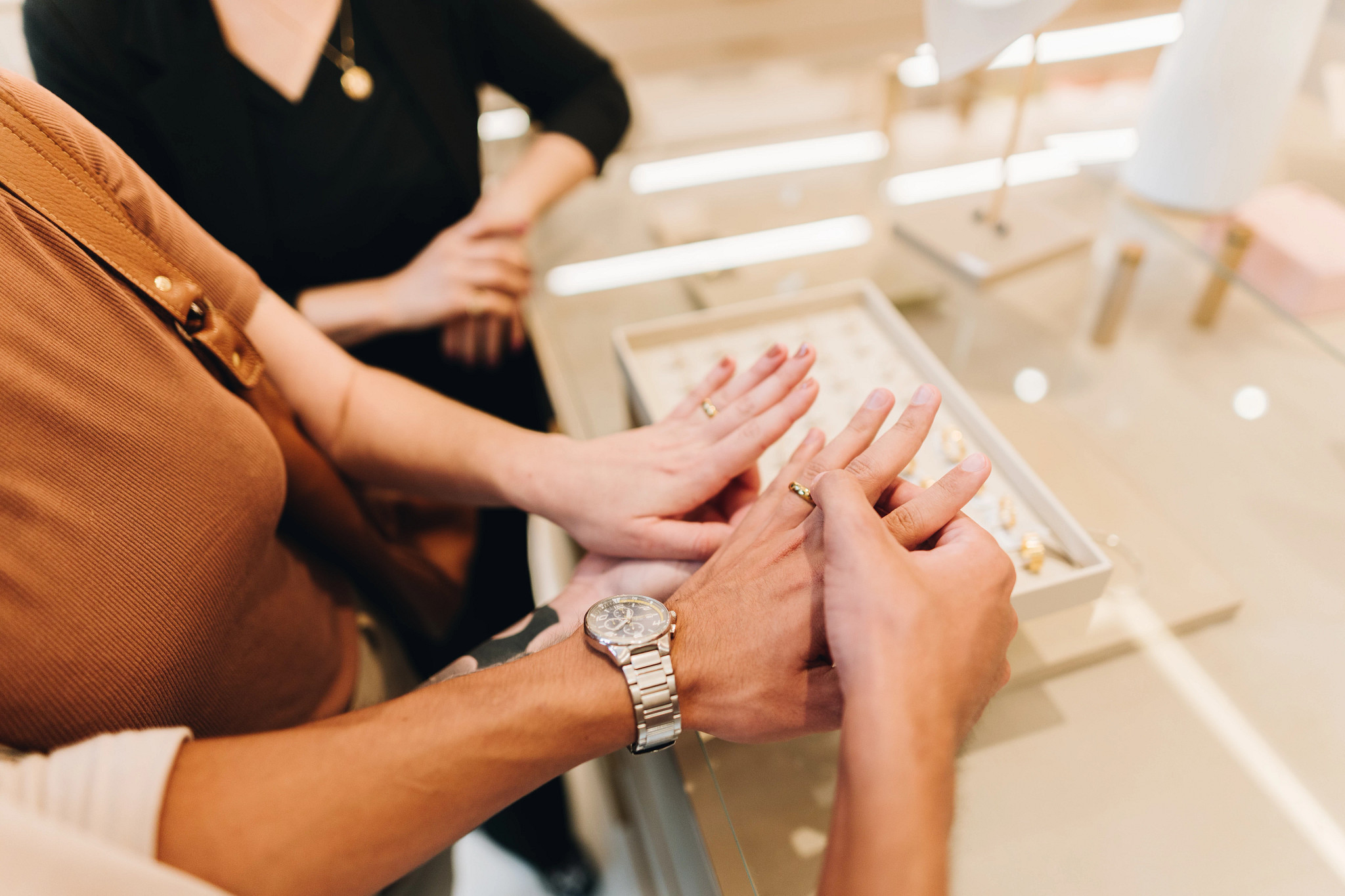
Only 49% of engagement ring owners insure at purchase per the Jewelers Mutual 2026 study, while 90% travel with their ring — a coverage gap Indian solitaire buyers should urgently close.
Engagement Ring Insurance in 2026: What the Jewelers Mutual Study Reveals About Coverage Gaps and Solitaire Settings Indian Buyers Should Know
Fewer than half of engagement ring owners — just 49% — insure their ring at the time of purchase, according to the Jewelers Mutual 2026 Engagement Ring Study, a May 2026 survey of 2,000 U.S. adults who purchased or received an engagement ring in the past five years. That number is striking because the same study found 90% of wearers travel with their ring and 62% count it among the three most expensive things they own. For Indian buyers, particularly those investing in lab-grown diamond solitaire rings that combine high perceived value with relatively lower replacement cost, the data is both a warning and an opportunity.
The gap between how much people value their ring and how little they do to protect it is the central finding of the study. Among uninsured wearers whose ring was damaged, 55% never had it repaired. That figure alone reframes insurance from a nice-to-have into a practical necessity.
At a Glance: Key Data Points from the 2026 Study
| Metric | Finding | Context |
|---|---|---|
| Insured at purchase | 49% | Fewer than half of ring owners |
| Travel with ring | 90% | Near-universal behavior |
| Ring among top 3 most expensive possessions | 62% | High financial exposure |
| Uninsured damaged rings never repaired | 55% | Direct cost of coverage gap |
| Proposers holding ring 1+ month before proposal | 41% | Pre-proposal risk window |
| Unsecured pre-proposal storage | 45% | Drawer or closet, no safe |
| Solitaire setting share (2026) | 37% | Up from 22% in 2024 |
| White gold share (2026) | 43% | Up from 35% in 2024 |
| Design cited as top ring factor | 52% | Ahead of price and stone size |
| Jewelers as trusted insurance source | 2nd | Behind family only |
Sources: Jewelers Mutual 2026 Engagement Ring Study; INSTORE Magazine
What exactly did the Jewelers Mutual 2026 study measure?
The Jewelers Mutual 2026 Engagement Ring Study is a nationally representative online survey of 2,000 U.S. adults aged 18 and older, conducted in May 2026. Participants met three criteria: they were responsible for insurance decisions in their household, they had purchased or received an engagement ring in the last five years, and they were currently engaged or married within the past five years. The sample was recruited via an online research panel and completed via self-completion questionnaire.
This methodology matters for Indian buyers reading the data. The study reflects U.S. consumer behavior, but the behavioral patterns — wearing rings during cooking, sleeping, hiking; traveling internationally with them; storing them unsecured before the proposal — are broadly applicable to urban Indian couples, particularly in metro markets where lab-grown diamond rings are now a mainstream purchase.
Jewelers Mutual Group, which commissioned the study, has been insuring jewelry since 1913 and holds 39 consecutive "A+ Superior" ratings from AM Best, making it one of the most credible sources of data on jewelry risk behavior globally.
Why does the pre-proposal storage window matter so much?
The risk window for an engagement ring — the period between purchase and the proposal itself — is longer and more dangerous than most buyers assume. Forty-one percent of proposers hold onto the ring for more than a month before proposing, and on average it takes 2.5 years from the decision to propose before the actual proposal happens.
During that waiting period, nearly half (45%) store the ring somewhere unsecured — a drawer, a closet, a shoebox. This is when the ring is most likely to be lost, stolen, or damaged without any coverage in place. Most buyers think of insurance as something you arrange after the proposal, which means the ring sits unprotected during one of its highest-risk phases.
Mike Alexander, President of Jewelers Mutual, put it directly: "An engagement ring is often one of the most valuable things a couple owns, and one of the most meaningful. What this research shows us is that people are wearing their rings more than ever and putting them through the full range of daily life, which is exactly when having the right protection matters most."
His recommendation is unambiguous: purchase insurance before or at the time of the proposal, not after. Store the ring in a safe or safety deposit box during the pre-proposal period. Document it with photographs and a professional appraisal from day one.
For Indian buyers who may be purchasing a lab-grown diamond solitaire weeks or months before a planned proposal — perhaps timing it around a festival, a family gathering, or an auspicious date — this pre-proposal window is a real and underappreciated exposure.
How does everyday wear create coverage risk?
The study documents that engagement ring wearers treat their rings as permanent accessories, not occasional jewelry. Ninety percent travel with their ring. Most keep it on during cooking (60%), sleeping (60%), and hiking (65%). These are precisely the activities that cause prong damage, stone loosening, scratching, and loss.
A separate Jewelers Mutual 2026 Travel Study, conducted in February 2026 among over 1,500 U.S. adults, found that travel-related jewelry losses are nearly 2.5 times more likely to occur while jewelry is being worn than while it is packed. Gen Z and younger millennial travelers aged 18–34 experienced two to three times more jewelry loss than older travelers, likely because they treat jewelry as a lifestyle accessory rather than a stored valuable.
That same travel study found 40% of respondents had purchased jewelry while traveling in the last 12 months, with nearly 60% wearing that new piece home — often without documentation or coverage in place. Howard Stone, Vice President of Global Asset Protection and Claims at Jewelers Mutual, noted: "The ring left on a poolside table. The necklace worn through a busy airport. These are the moments that matter, and they're entirely preventable with the right habits."
For Indian couples who travel internationally for honeymoons — Bali, Europe, the Maldives — or domestically to hill stations and beaches, the travel risk is not theoretical. Jewelry is most vulnerable near water, in hotels, and at airports. A ring worn snorkeling in Andaman or left on a hotel nightstand in Udaipur faces real exposure that standard home insurance in India typically does not cover.
What is the solitaire setting surge, and why does it matter for Indian buyers?
Solitaire settings feature a single center stone held by prongs, a bezel, or a tension setting, with no side stones or pavé accents on the band. The 2026 Jewelers Mutual study found that solitaire settings now make up 37% of all engagement rings, up from 22% in 2024 — a 15-percentage-point jump in two years that makes solitaires the single most popular setting style.
This trend maps directly onto what Indian buyers are choosing. The best lab-grown diamond solitaire rings in India — whether in classic four-prong, six-prong, or U-prong configurations — have seen significant demand growth, driven by the same preference for design simplicity and stone visibility reshaping the U.S. market. Design or uniqueness is the top factor in ring selection, cited by 52% of respondents, well ahead of price, stone size, or brand.
The insurance implication of the solitaire surge is specific and practical. A solitaire setting concentrates all value in a single stone held by a small number of prongs. That means:
- Prong wear over time can cause the center stone to loosen and eventually fall out
- A lost center stone in a solitaire is a total loss of the ring's primary value
- Cooking, hiking, and sleeping — the activities most wearers continue during — are exactly the activities that stress prongs
Lab-grown diamonds hold up well under daily wear in terms of hardness, but no diamond is immune to the mechanical failure of its setting. A full jewelry insurance policy covering accidental damage and mysterious disappearance closes this gap in a way that standard home insurance does not.
White gold deserves a note here too. The study found white gold is now the metal in 43% of engagement rings, up from 35% in 2024. White gold requires rhodium plating to maintain its bright finish, and that plating wears off with daily use — particularly during cooking and sleeping. Replating is inexpensive, but it is a maintenance cost buyers should factor in. Platinum, which the study notes has grown in preference, does not require replating but costs more upfront. Neither metal choice eliminates the need for insurance; both face the same prong-wear and loss risks.
What does specialized jewelry insurance actually cover that home insurance doesn't?
Specialized jewelry insurance is a standalone policy — or a scheduled rider — that covers a named piece of jewelry for its full appraised value against loss, theft, accidental damage, and mysterious disappearance, regardless of where the loss occurs. This is distinct from the jewelry coverage embedded in standard homeowners or renters policies, which typically carries sub-limits (often ₹50,000–₹1,00,000 in Indian home policies, or $1,500–$2,500 in U.S. policies) and excludes several common loss scenarios.
Rapaport's analysis of the jewelry insurance market identifies the key gaps in standard home coverage driving buyers toward specialized policies:
Mysterious disappearance exclusion. Standard home policies often do not cover unexplained loss — the ring that simply isn't there when you reach your hotel, or the stone that fell out somewhere during a hike. Mysterious disappearance coverage ensures the policyholder receives full replacement value even when the loss cannot be explained as a theft.
Activity-based exclusions. Loss or damage during cooking, swimming, or sports may be excluded or disputed under a standard policy. Specialized jewelry insurance typically covers these scenarios without requiring proof of a specific incident.
Sub-limits below ring value. A ₹3,00,000 lab-grown diamond solitaire ring — a realistic mid-range purchase in India's current market — may far exceed the jewelry sub-limit in a standard home policy, leaving the policyholder with only the sub-limit rather than the ring's actual value.
High deductibles. Even where coverage exists, a high deductible can make a claim economically pointless for a mid-value ring. Specialized jewelry policies often offer low or zero deductible options.
Travel exclusions. Standard home policies typically cover jewelry only while it is within the home. The 90% of wearers who travel with their ring are unprotected the moment they leave the house.
The cost of specialized jewelry insurance is generally 0.5% to 1.5% of the ring's appraised value per year, according to Rapaport's market analysis. On a ₹3,00,000 ring, that translates to ₹1,500–₹4,500 annually — roughly the cost of a single restaurant dinner. On a ₹6,00,000 ring, the range is ₹3,000–₹9,000 per year.
In India, specialized jewelry insurance is available through insurers including New India Assurance, HDFC ERGO, and Tata AIG, typically as a "Jewellery All Risk" policy or as a scheduled item under a householder's package. The key is to ensure the policy covers "all risks" including mysterious disappearance and accidental damage, not just theft and fire.
How does the generational split in ring-wearing affect insurance decisions?
The 2026 study reveals a sharp generational divide in mutual ring-wearing — the practice of both partners wearing an engagement or commitment ring. More than 80% of couples aged 55 to 64 both wear a ring, compared with just 43% of couples aged 18 to 24.
This matters for insurance in two ways. Younger couples — who are statistically less likely to both wear rings — are also the group most likely to underinsure. The travel study found Gen Z and younger millennials experience two to three times more jewelry loss than older travelers. High-risk behavior and low insurance uptake are most concentrated in the demographic most actively buying engagement rings right now.
As mutual ring-wearing grows — the study suggests it is becoming the norm overall even if younger couples are still catching up — the total value of jewelry in a household increases. A couple where both partners wear rings has double the exposure of a single-ring household, and that exposure multiplies if either ring is a high-value lab-grown diamond piece.
For Indian buyers, the mutual ring-wearing trend is worth watching. While the tradition of the groom wearing a ring is less universal in India than in the West, it is growing in urban markets. Men's diamond solitaire rings are an increasingly visible category in Indian jewelry retail. Couples who purchase rings for both partners should insure both — and should not assume that a single household policy covers multiple high-value pieces adequately.
Who should Indian buyers trust for insurance guidance?
The 2026 study found that jewelers rank as the second most trusted source for jewelry insurance recommendations, behind only family. A separate finding from Jewelers Mutual's research page notes that 58% of respondents view friends and family as a trusted source for jewelry insurance recommendations.
This trust hierarchy has a practical implication: the conversation about insurance should happen at the jeweler's counter, not weeks later when the buyer has moved on. Rapaport's analysis confirms that point-of-sale education is one of the primary drivers of insurance uptake — retailers who proactively discuss insurance at the time of purchase see significantly higher coverage rates among their customers.
For Indian buyers purchasing from lab-grown diamond stores in Delhi or other metro markets, the right moment to ask about insurance is during the purchase conversation itself. Ask the jeweler whether they partner with any insurance providers, whether they offer appraisal documentation at the time of sale, and what their recommendation is for specialized coverage. If the jeweler cannot answer these questions, that is useful information about their post-sale support capabilities.
What are the practical steps Indian buyers should take right now?
The Jewelers Mutual recommendations translate directly to the Indian context with minor adaptations:
Get the appraisal at purchase. A professional appraisal — documenting the stone's carat weight, cut, color, clarity, and the metal type and weight — is the foundation of any insurance claim. Many Indian jewelers provide a certificate from a gemological lab (IGI, GIA, or SGL) with lab-grown diamonds; ensure this is in your possession and stored separately from the ring.
Photograph the ring immediately. Take high-resolution photographs from multiple angles, including close-ups of the setting and any identifying characteristics. Store these in cloud storage, not only on your phone.
Purchase insurance before the proposal. If you are holding the ring for weeks or months before proposing, it is unprotected during that entire period under most standard policies. A specialized jewelry policy can be activated at the time of purchase.
Store the ring securely before the proposal. A home safe or bank locker — which most Indian banks offer at low annual cost — is the appropriate storage for a ring worth ₹2,00,000 or more. A drawer or wardrobe is not.
Review your existing home policy. Check the jewelry sub-limit in your existing householder's or home insurance policy. If it falls below the replacement value of your ring, you need either a scheduled rider or a standalone jewelry policy.
Consider travel coverage specifically. If you plan to travel internationally for a honeymoon or domestically to beach or hill destinations, confirm that your jewelry policy covers loss outside the home and outside India. Some policies restrict coverage to the home address; others provide worldwide coverage.
Re-appraise periodically. Lab-grown diamond prices have shifted significantly over the past few years. An appraisal from two years ago may not reflect the current replacement cost. Re-appraise every two to three years and update your policy accordingly.
Does the solitaire setting choice affect insurance cost or claims?
Setting style affects both a ring's risk profile and its insurability. Solitaire settings — now the most popular choice at 37% of rings per the 2026 study — concentrate value in a single stone and rely on a small number of prongs to hold it. The specific risk: prong failure leading to stone loss.
Curved solitaire bands and floral or lily-cut settings add design complexity that can affect how prongs wear over time. Two-stone designs distribute value across two stones, changing the loss scenario — losing one stone is a partial loss, not a total one.
For insurance purposes, the key variable is not the setting style but the appraised value. Insurers price jewelry policies based on the declared replacement value, not the design. The setting style does, however, affect the maintenance schedule a wearer should follow: solitaires with four-prong settings should be inspected by a jeweler every six to twelve months to check prong integrity, particularly if the ring is worn during high-activity pursuits like cooking, hiking, or gym workouts.
The study's finding that 65% of wearers keep their ring on during hiking is particularly relevant here. Hiking involves grip, impact, and exposure to rocks and soil — all of which stress prongs. A wearer who hikes regularly with a four-prong solitaire should consider a six-prong setting for added security, or commit to more frequent prong inspections. Six-prong solitaire settings hold the stone more securely and provide a backup if one prong fails.
What does the broader insurance trend mean for the lab-grown diamond market in India?
The shift toward specialized jewelry insurance is accelerating globally. Rapaport's analysis identifies several converging factors: consumers are learning that standard home policies do not cover their rings adequately; online insurance quotes have made coverage faster and more accessible; and point-of-sale education by jewelers is improving.
In India, the lab-grown diamond market adds a specific dimension. Lab-grown diamonds are chemically and physically identical to mined diamonds — same hardness (10 on the Mohs scale), same optical properties, same durability under daily wear. Their price point is lower than comparable mined diamonds, which means buyers can access larger stones and more elaborate settings for the same budget. A buyer who might have purchased a 0.5 carat mined diamond solitaire five years ago may now be wearing a 1.5 carat lab-grown diamond solitaire — a ring with a significantly higher replacement cost than their previous jewelry, and one that likely exceeds their existing home policy's jewelry sub-limit.
This upgrade in ring value has not been matched by an upgrade in insurance coverage for most Indian buyers. The 49% insurance gap documented in the U.S. study is likely wider in India, where jewelry insurance awareness is lower and the habit of purchasing specialized coverage at the point of sale is less established.
The practical conclusion is straightforward: if you have purchased a lab-grown diamond ring in the past two years, check whether your existing insurance covers it at full replacement value. For most buyers, it will not — and the cost of closing that gap is modest relative to the value at risk.
Summary: What the 2026 data means for your ring purchase decision
The Jewelers Mutual 2026 Engagement Ring Study is the most comprehensive recent dataset on how people actually live with their engagement rings. The gap between how much they value those rings and how little they do to protect them is the study's defining finding. Fewer than half insure at purchase. Most wear their ring through every activity that puts it at risk. And when damage occurs without coverage, more than half simply never repair the ring.
The solitaire surge — from 22% to 37% of rings in two years — reflects a genuine shift in design preference toward simplicity and stone visibility. For Indian buyers of lab-grown diamond solitaires, that shift is already underway. The insurance habits need to follow.
The steps are not complicated: get an appraisal at purchase, photograph the ring, buy a specialized policy before or at the proposal, store the ring securely in the interim, and review coverage whenever you travel. The cost is low. The alternative — joining the 55% of uninsured wearers who never repair their damaged ring — is not.
Sources
- Jewelers Mutual Study: 90% of Wearers Travel With Engagement Rings But Fewer Than Half Insure at Purchase — INSTORE Magazine
- 2026 Engagement Ring Study | Jewelers Mutual
- Jewelry Trend Insights and Research | Jewelers Mutual
- Jewelers Mutual® Study Reveals Jewelry Losses Are 2.5x More Likely When Worn During Travel — PR Newswire
- Jewelers Mutual® Study Reveals Jewelry Losses Are 2.5x More Likely When Worn During Travel — Yahoo Finance
- Why More Engagement-Ring Buyers Are Getting Jewelry Insurance — Rapaport
- Best Lab-Grown Diamond Engagement Rings to Buy in India (2026) — Lab Diamond Insights
- 1.5 to 2 Carat Oval Lab-Grown Diamond Solitaire Rings: What to Know Before Buying in India (2026) — Lab Diamond Insights
- How Lab-Grown Diamonds Hold Up Under Daily Wear: Real User Durability Reports — Lab Diamond Insights
- Best U-Prong and Six-Prong Lab Grown Diamond Solitaire Engagement Rings in India (2026) — Lab Diamond Insights